Get Free Quote

PVC Folding Doors Dubai
Budget-Friendly Alternative - 60-70% Lower Cost

Affordable PVC folding doors offering practical solution for secondary areas. Weather-resistant plastic construction, low maintenance requirements, fast installation in 1-2 days. Perfect for utility rooms, storage areas, balconies where premium aluminium not required. Cost-effective at AED 800-2,500 complete installation.

What Are PVC Folding Doors? Understanding Budget Alternative

PVC folding doors—also called UPVC concertina doors, plastic bifold doors, or vinyl folding systems—consist of rigid PVC (polyvinyl chloride) plastic frames with glazing panels that fold concertina-style creating variable opening widths. Technology represents budget-friendly alternative to premium aluminium bifold systems with total installation costs typically 60-70% lower while delivering adequate performance for secondary applications where maximum durability, thermal efficiency, or aesthetic refinement not critical priorities. Construction fundamentally different from engineered aluminium systems creating distinct material characteristics, performance parameters, and appropriate use-case scenarios. Understanding these differences enables realistic expectations and proper material selection matching application requirements rather than attempting to force budget materials into premium applications where inevitable disappointment results. Material composition straightforward compared to complex aluminium thermal-break engineering: PVC frames extruded from rigid plastic polymer formulations incorporating UV stabilizers preventing sun degradation, plasticizers achieving desired flexibility-versus-rigidity balance, impact modifiers enhancing toughness, pigments providing color (typically white, beige, or wood-grain laminates). Frame profiles feature multi-chamber hollow construction providing some structural rigidity and minimal thermal insulation versus solid plastic or single-chamber economy grades lacking adequate strength. Steel reinforcement inserts added larger frames or heavy-duty applications where pure plastic insufficient load-bearing capacity though adds weight and potential corrosion points undermining plastic's rust-proof advantage. Overall engineering philosophy optimized minimizing manufacturing costs and retail pricing versus aluminium's performance optimization approach where engineering complexity justified by superior long-term value proposition. For comprehensive understanding premium aluminium alternative systems offering measurably superior performance primary applications, see our complete door systems overview covering bifold, sliding, and pivot entrance configurations with detailed technical specifications and performance data.

Slim Sliding Doors
Slim Sliding Doors
Telescopic Doors
Telescopic Doors
Folding Doors
Folding Doors

Hardware and mechanical components represent primary cost-optimization area distinguishing PVC from premium aluminium systems. Component specifications PVC systems: hinges generally zinc-alloy castings or basic stamped steel (versus precision stainless steel or marine-grade aluminium premium systems), rollers typically nylon wheels or basic plastic assemblies with simple bushing bearings (versus sealed ball-bearing precision rollers), locking mechanisms simple barrel locks or basic 2-point systems (versus sophisticated multi-point espagnolette bolts with shoot-bolt security), handles economy plastic or basic aluminium lever designs (versus premium stainless steel or powder-coated aluminium architectural hardware). Track systems somewhat paradoxically use aluminium even PVC door assemblies as extruded aluminium track more durable and wear-resistant than plastic alternatives—one area where material upgrade justified despite otherwise budget orientation. Quality variation enormous across PVC supplier landscape making material sourcing critical: Premium European UPVC profiles from German or UK manufacturers with rigorous quality standards, proper UV stabilization formulations, consistent wall thicknesses, and documented performance testing command 30-40% premium over economy Asian imports but deliver measurably better 8-12 year service life versus 3-5 year degradation cheap materials. Wall thickness specifications particularly telling: premium grades specify 2.5-3mm profile walls providing adequate rigidity and longevity, economy grades cut costs using 1.5-2mm walls creating noticeable flex, faster wear, and earlier replacement requirement. Our specification policy when supplying PVC systems mandates European-grade UPVC ensuring reasonable performance expectations met avoiding client dissatisfaction when economy materials fail prematurely—false economy saving AED 200-300 upfront only to require complete replacement 4-5 years versus 10-12 year premium UPVC service life. For detailed understanding outdoor construction material durability and performance considerations relevant Dubai's harsh climate, our technical capabilities documentation covers material science, environmental testing, and long-term performance validation across product portfolio.

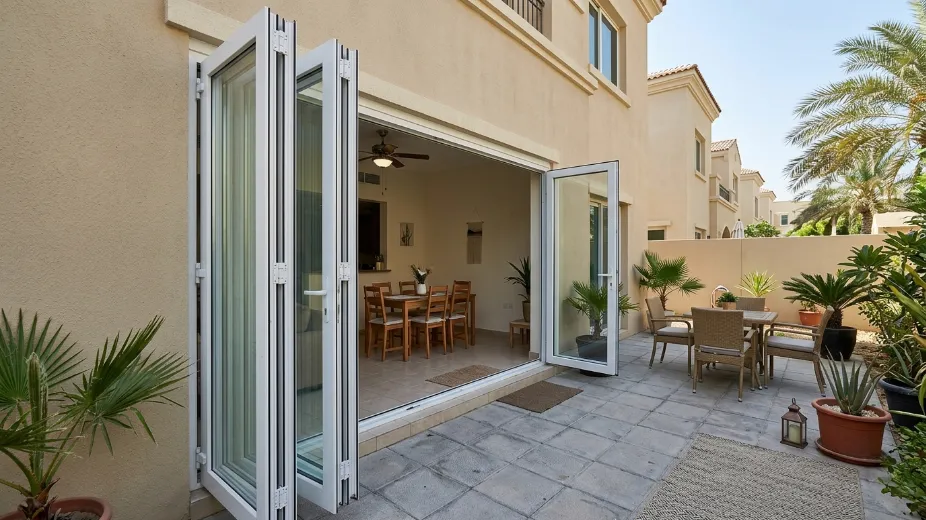
PVC folding doors installed in utility room showing budget-friendly solution for secondary areas in Dubai property

Appropriate application scenarios and realistic use-case matching critical ensuring client satisfaction and avoiding expensive material selection errors. Ideal PVC folding door applications where budget constraints genuine and performance compromises acceptable: Utility and laundry rooms where functional access prioritized over aesthetic refinement and replacement every 8-10 years acceptable given room function (typical 2-3 panel configurations 1.5-2m wide, AED 900-1,400 installed providing adequate weather protection and draft resistance). Storage areas, walk-in closets, and pantries requiring occasional access without high traffic patterns or thermal control requirements (simple 2-panel configurations suffice, minimal security or weathersealing demands, cost savings AED 2,000-3,000 versus aluminium applied across multiple secondary openings). Secondary balconies in rental properties or budget apartments where landlord capital expenditure minimization paramount and tenant expectations modest (PVC delivers adequate outdoor access at fraction aluminium cost, economical replacement when needed versus premium system investment rental contexts). Internal space dividers and temporary partitions where permanent wall construction not desired but visual privacy or climate separation beneficial (lightweight PVC panels easily installed and removed if spatial requirements change). Secondary building entrances including utility access, service doors, or loading areas not visible from primary elevations where function vastly more important than form (adequate security and weather resistance, budget appearance acceptable non-public locations). Multi-unit budget residential developments where developer minimizing per-unit costs across dozens of apartments creating compelling economies specifying PVC secondary areas—total savings portfolio-wide can reach AED 40,000-80,000+ funding other amenity improvements or reducing overall project costs improving development ROI. Completely inappropriate PVC applications where aluminium specification mandatory regardless of budget constraints: Main living area bifold systems opening primary spaces to gardens, terraces, or outdoor entertainment areas where thermal efficiency, structural integrity, premium aesthetics, and long-term durability essential rather than optional (PVC thermal performance, appearance, and lifespan inadequate these critical applications). Primary property entrances and front doors where first impressions establish property value perception and material quality signals overall specification level throughout (PVC appears budget-grade unsuitable luxury or even mid-market properties where value perception matters). Large openings exceeding 3.5-4 meters where structural demands exceed PVC capabilities causing deflection, sagging, and operational problems even properly installed and maintained (physics of material strength limits practical PVC spans). Fully exposed coastal locations experiencing direct salt air, intense UV radiation, and severe weather where even premium UPVC grades degrade measurably faster than properly specified aluminium systems (accelerated replacement cycle undermines initial cost savings). Premium property segments including Emirates Hills villas, Palm Jumeirah apartments, Downtown Dubai luxury developments where material quality expectations and property value considerations absolutely preclude plastic door systems regardless of adequate functional performance (market positioning and buyer expectations trump pure performance metrics). Our consultation approach emphasizes honest material-to-application matching rather than sales-driven approach pushing whatever client willing to purchase: PVC offers genuine value proposition properly applied secondary areas with realistic expectations; attempting substitute for aluminium primary applications where performance, aesthetics, or durability critical creates inevitable dissatisfaction damaging client relationships and our reputation. Transparent guidance upfront prevents poor specification decisions protecting both client interests and our long-term business success built on honest dealing and appropriate solutions. For comprehensive guidance matching door systems to specific applications, property types, budget parameters, and performance requirements, consult our complete buying guide with decision frameworks and selection criteria.

PVC Folding Doors Advantages & Limitations

Understanding realistic benefits and constraints of PVC systems enables appropriate application decisions matching material capabilities to actual requirements.

💰

Significant Cost Savings

Primary PVC advantage remains dramatic cost differential versus aluminium systems creating genuine budget accessibility where capital constraints exist. Comparative pricing analysis typical residential configurations reveals compelling economics: standard 3-panel 2.5m wide system opening utility room or balcony access costs AED 1,200-1,800 complete PVC installation (European-grade UPVC, basic single glazing, economy hardware, professional installation) versus equivalent aluminium bifold AED 3,500-5,000 (thermal-break frames, powder coating, double-glazing, stainless hardware, professional installation)—absolute savings AED 2,200-3,200 per opening representing 60-70% cost reduction. Economics compound dramatically larger projects and multi-unit installations: property developer equipping 20 rental apartments with balcony access realizes AED 44,000-64,000 portfolio-wide savings specifying PVC versus aluminium freeing substantial capital for amenity improvements, superior kitchen/bathroom specifications, or reducing overall project costs improving development ROI and competitive positioning. Individual homeowner allocating fixed AED 50,000 renovation budget can specify PVC secondary areas (utility room AED 1,200, storage access AED 900, laundry partition AED 1,100) totaling AED 3,200 versus AED 9,000-11,000 aluminium equivalent—freed AED 6,000-8,000 allows upgraded tile selections, premium appliances, or enhanced lighting throughout property creating superior overall result within same budget envelope. Material cost advantage reflects fundamental economics: raw PVC resin substantially cheaper than aluminium billet (approximately 40% cost per kilogram), extrusion processes simpler requiring less sophisticated tooling and lower capital equipment investment, hardware components economy-grade versus precision-engineered reducing bill-of-materials costs, installation labor reduced as lightweight PVC handled faster by fewer personnel. However cost savings inseparable from performance trade-offs requiring honest assessment: shorter 8-12 year expected service life versus 25+ years properly maintained aluminium means replacement required roughly twice as frequently, inferior thermal performance (U-value 3.5-5.0 versus 2.0-2.8 aluminium) increases ongoing cooling costs in climate-controlled spaces though impact modest secondary areas, less refined appearance potentially impacts property value perception luxury or upper-mid-market segments where material quality signals overall specification level. Total cost of ownership calculation spans initial investment plus ongoing operational costs plus replacement timing: PVC wins decisively 0-12 year timeframe given lower capital requirement and minimal maintenance, aluminium overtakes 12-20 year period as avoids complete replacement costs and superior thermal performance accumulates energy savings, aluminium dominates 20+ years as continues performing while PVC requires second complete replacement. ROI determination depends on ownership horizon and priorities: short-term capital conservation and rental property contexts favor PVC, long-term ownership and property value focus favor aluminium despite higher upfront investment. Our approach presents transparent total-ownership-cost analysis enabling informed client decisions based on actual priorities rather than simply selling lowest-cost option or highest-margin product regardless of suitability. For properties requiring assessment of existing door systems potentially needing replacement or comprehensive upgrades, our door evaluation and repair service determines whether refurbishment viable or complete replacement more cost-effective long-term solution.

Show more
🛡️

Rust-Proof Construction

Complete PVC plastic construction eliminates ferrous metal corrosion issues particularly relevant Dubai coastal properties experiencing aggressive salt air environments accelerating oxidation processes. Material chemistry fundamental: PVC polymer chains inherently non-reactive to oxygen and moisture preventing rust formation entirely unlike ferrous metals requiring protective coatings or passive oxide layers maintaining corrosion resistance. Aluminium naturally forms protective aluminium oxide surface layer providing excellent corrosion resistance but steel reinforcement inserts some aluminium frames or economy-grade steel hardware components can initiate rust if protective powder coating compromised or marine environment particularly aggressive—Palm Jumeirah waterfront properties, Dubai Marina high-rises, Jumeirah Beach Residence developments all experience measurably higher corrosion rates than inland locations. PVC sidesteps issue completely: frame material plastic throughout, no surface coatings or treatments required maintaining corrosion immunity, exposed fasteners and visible hardware components minimal compared to complex aluminium bifold mechanisms reducing potential corrosion surface area. Practical benefit manifestation: coastal installation PVC system maintains appearance and function without rust staining, discoloration, or mechanical binding from corroded components throughout 8-12 year service life, aluminium systems properly specified with marine-grade powder coating and stainless steel hardware perform equivalently but specification discipline critical whereas PVC forgives inadequate specification. However advantage magnitude somewhat overstated marketing materials: properly engineered aluminium systems using adequate powder coating thickness (80-100 microns versus 60 micron minimum), marine-grade 316 stainless steel hardware, and appropriate EPDM weatherseals perform excellently even direct coastal exposure 15-20+ years before any corrosion evidence appears making rust-proof advantage more relevant neglect scenarios or economy aluminium specifications than properly maintained premium systems. Realistic assessment positions corrosion immunity as genuine PVC advantage but unlikely deciding factor for properly specified and maintained aluminium alternatives—more significant budget installations where ongoing maintenance uncertain, specification quality questionable, or replacement every decade acceptable given other limitations. For understanding comprehensive material durability and environmental resistance considerations across product range, see our technical capabilities overview documenting material testing, environmental validation, and long-term performance data. For properties requiring specialized weather protection including outdoor structure enclosures where corrosion resistance particularly critical, material selection guidance ensures appropriate solutions matching exposure conditions.

Show more
🧹

Minimal Maintenance Requirements

PVC surfaces and mechanical components require substantially less ongoing maintenance versus aluminium systems needing periodic attention maintaining optimal performance and appearance. Maintenance requirement comparison reveals compelling convenience advantage: PVC folding doors typically need only annual cleaning with mild soap and water (plastic surfaces wipe clean easily, no powder coating to protect or touch up), hardware lubrication every 12-18 months (limited moving parts, simple pin hinges and basic rollers versus complex pivot mechanisms), weatherseal inspection rarely given EPDM gaskets long-lasting with minimal compression on flexible PVC frames. Contrast aluminium bifold maintenance schedule: powder coating inspection and chip/scratch touch-up every 3-5 years preventing exposed aluminium oxidation and aesthetic degradation (particularly door bottom edges experiencing shoe scuffs and ground contact), comprehensive hardware lubrication every 6-12 months (precision pivot points, roller bearings, multi-point locks, and alignment adjustment screws all requiring specific lubricants maintaining smooth operation), weatherseal replacement every 5-8 years as EPDM gaskets compress and degrade particularly harsh Dubai UV exposure and extreme temperature cycling, track cleaning and adjustment every 12-24 months ensuring debris removal and proper alignment preventing accelerated wear. Time investment differential accumulates: PVC maintenance perhaps 30-45 minutes annually plus occasional AED 100-200 hardware replacement versus aluminium 60-120 minutes annually plus AED 300-500 periodic seal/hardware/coating maintenance. Ten-year period total: PVC approximately 6-8 hours owner time plus AED 500-800 parts/materials, aluminium 15-25 hours plus AED 2,000-3,500 maintaining premium system performance. However maintenance advantage context-dependent: savings relevant time-constrained property owners or rental contexts where minimizing ongoing service requirements valuable, less significant if comparing professional maintenance contracts where service provider handles all maintenance both materials at comparable annual fees. Also maintenance differential shrinks comparing premium aluminium specifications using superior components (German hardware, premium EPDM formulations, thick powder coating) versus entry-level aluminium requiring frequent adjustment and replacement—quality gap narrows as aluminium specification quality increases. Total ownership perspective requires considering maintenance savings alongside shorter PVC lifespan: saving AED 1,500-2,500 maintenance over 10 years partially offset by complete PVC system replacement AED 1,200-2,500 versus aluminium continuing 20+ years with proper care. ROI calculation depends whether lower ongoing attention valued higher than extended service life without replacement. Our maintenance guidance covers both materials comprehensively: for detailed care procedures optimizing longevity and performance across door types, our complete maintenance guide provides schedules, techniques, and troubleshooting covering aluminium, PVC, and specialty systems.

Show more

Faster Installation Timeline

PVC folding door installation typically completes 1-2 days versus 2-4 days aluminium systems owing to simpler framing requirements, lighter component weight, and less precise fitting tolerances. Installation process advantages: lightweight PVC frames handled easily by 1-2 installers without heavy lifting equipment, rigging, or multiple personnel coordination (typical 3-panel system weighs 25-35 kg versus 60-80 kg equivalent aluminium), pre-assembled panel sets attach quickly without extensive on-site fabrication, cutting, or modification (PVC tolerates dimensional variances aluminium thermal-break systems cannot accommodate), basic shimming and mechanical fastening sufficient as precision thermal integrity and weatherseal compression tolerances less critical than engineered aluminium (adequate versus optimal performance standard), limited sealing and weatherproofing work given simpler frame geometry and less sophisticated gasket systems. Aluminium installation more involved and time-consuming: heavier frames requiring careful handling, positioning, and securing without damage to powder coating or frame geometry, thermal-break systems demanding precise alignment ensuring thermal integrity maintained across entire perimeter (gaps or misalignment compromise insulation performance), extensive weatherseal installation and compression adjustment creating proper contact all interfaces (over-compression binds operation, under-compression allows air/water infiltration), hardware adjustment and fine-tuning ensuring smooth synchronized operation across all panels throughout complete folding range. Timeline advantage compounds multi-unit applications: developer installing PVC systems across 20 rental units completes approximately 30-35 working days versus 50-70 days equivalent aluminium installations—20-35 day acceleration enables earlier unit turnover, faster revenue recognition, and reduced carrying costs during construction. Installation labor cost differential also significant: PVC installation performed by general contractors or competent handyman-level personnel charging AED 150-250 daily versus aluminium requiring specialized door installation expertise commanding AED 300-500 daily rates. Combined material and labor savings create compelling economics budget projects. However installation speed advantage should not be overvalued in decision calculus: most door installations occur during broader renovation or construction projects where overall schedules measured weeks or months making 1-2 day installation timeline difference relatively immaterial against total project duration. Also rushed PVC installation sometimes compromises quality: insufficient attention squaring and leveling creates future operational problems (binding, uneven gaps, premature wear), inadequate weatherseal positioning allows air infiltration and water penetration, hasty hardware adjustment leads to early failures. Proper installation practices matter regardless of material—fast installation beneficial when genuinely time-constrained but should never come at expense of workmanship quality ensuring long-term performance and client satisfaction. Our installation standards maintain quality regardless of material or timeline pressures: comprehensive measurement and preparation, careful frame positioning and securing, thorough hardware adjustment and testing, client handover with operation demonstration and maintenance guidance. For properties requiring coordinated installation across multiple door types and configurations, our complete service capabilities cover consultation through installation and ongoing support ensuring successful project outcomes.

Show more
⚠️

Performance Limitations

Honest assessment of PVC constraints and limitations essential setting realistic client expectations and preventing disappointment when inherent material characteristics manifest. Structural limitations most significant: PVC frames deflect and sag considerably more than aluminium under equivalent span and loading conditions limiting practical opening widths 3-4 meters maximum before vertical drop and operational binding become problematic (aluminium confidently spans 8+ meters with proper engineering), panel weight restrictions as plastic frame strength-to-weight ratio inferior aluminium alloys (heavier glazing or oversized panels accelerate sagging), long-term dimensional stability concerns as thermal expansion coefficient PVC approximately 5X aluminium creating greater movement with temperature fluctuations (visible as seasonal gaps or tightness depending on ambient conditions). Wind resistance and weathersealing performance inferior particularly larger configurations: panel flex under wind loading compromises weatherseal contact allowing water infiltration and draft, frame deflection creates uneven gaps around perimeter reducing acoustic insulation and climate control effectiveness, overall system rigidity inadequate high-wind exposure or large unprotected openings. Thermal performance substantially worse than properly engineered aluminium: single-glazing typical PVC systems (versus insulated double-glazing standard aluminium) offers minimal insulation value, PVC material itself better insulator than aluminium but frame design optimization and thermal-break technology absent economy systems, overall U-value (heat transfer coefficient) PVC systems 3.5-5.0 W/m²K versus aluminium thermal-break 2.0-2.8 W/m²K representing 40-60% worse insulation performance increasing cooling loads climate-controlled spaces. Longevity and durability concerns inherent material properties: UV degradation causes progressive yellowing, surface chalking, and embrittlement after 8-12 years even premium UV-stabilized UPVC formulations (visible as discoloration and reduced impact resistance), hardware and mechanisms wear faster given economy components and plastic mounting points versus metal substrates (hinges loosen, rollers flatten, locks fail prematurely), overall expected service life 8-12 years maximum before appearance degradation or mechanical failures necessitate complete replacement versus 25+ years properly maintained aluminium systems. Aesthetic limitations preclude PVC use image-conscious applications: plastic appearance inherently budget-grade regardless of quality level, visible texture and economy hardware lack architectural refinement expected premium properties, color options severely limited to white, beige, or wood-grain laminates versus unlimited powder coating palette aluminium, inability achieve ultra-slim profiles, frameless designs, or contemporary minimalist aesthetics popular luxury market. These limitations not necessarily disqualifying but must be understood and accepted upfront: PVC serves budget and secondary applications admirably delivering adequate function appropriate contexts, but cannot substitute for aluminium where performance, longevity, or aesthetics critical success criteria. Attempting apply PVC beyond suitable scope creates inevitable dissatisfaction as inherent material limitations manifest despite proper installation and maintenance. For applications requiring premium performance including high-security or commercial-grade installations, advanced aluminium systems with specialized finishes and enhanced specifications provide capabilities exceeding PVC by significant margins.

Show more
📉

Property Value Considerations

PVC specification impacts property market perception and resale value particularly luxury and upper-mid-market segments where material quality signals overall specification level. Dubai real estate market research indicates measurable value implications: properties featuring PVC doors versus aluminium typically perceived 5-8% lower overall specification quality by prospective buyers during viewings (material quality assumption extends to finishes, fixtures, and systems throughout), resale price impact negligible budget apartments and rental properties where PVC appropriate and expected specification level, measurable 3-5% resale discount luxury properties if PVC specified visible primary areas where aluminium universally expected and plastic doors considered specification compromise. Real estate agent feedback from luxury segment confirms market perceptions: PVC doors flagged during property viewings as budget specification raising questions about overall quality level, buyers in Emirates Hills, Palm Jumeirah, Downtown segments specifically inquire about door materials expecting aluminium as minimum acceptable standard, PVC presence main living areas creates negative halo effect where buyers assume other specification shortcuts taken throughout property reducing willingness to pay premium pricing. However impact highly context-dependent and application-specific: PVC utility room or storage area doors create zero resale impact as appropriate material selection for secondary spaces, PVC internal partition or secondary balcony acceptable budget and mid-market segments where value-conscious buyers appreciate cost-effective solutions, PVC main bifold system opening living room to terrace problematic luxury and upper-mid segments where material quality expectations preclude plastic regardless of functional adequacy. Developer specifications across Dubai market segments reflect these dynamics: zero PVC use premium villa projects Emirates Hills, Palm Jumeirah, Arabian Ranches where aluminium universal and expected, selective strategic PVC application mid-market apartments for secondary balconies and utility areas paired with aluminium primary locations maintaining overall quality perception, extensive PVC deployment only budget rental properties where minimizing capital expenditure paramount and tenant expectations modest given rental rates. Property value cost-benefit calculus: initial AED 2,000-4,000 per-opening cost saving specifying PVC versus aluminium potentially offset by AED 20,000-50,000+ reduced resale value if applied inappropriately luxury property (saving AED 8,000 across four openings but reducing property value AED 40,000 represents net AED 32,000 loss), same PVC specification budget property likely creates zero resale impact as specification-appropriate and buyer expectations aligned. Consultation and property assessment critical determining where PVC acceptable versus false economy: we evaluate property type, market segment positioning, buyer demographic expectations, competitive comparable properties advising where PVC specification appropriate versus where material quality compromise undermines property value more than cost savings justify. For properties requiring comprehensive specification consultation across all finish and material selections optimizing both cost and value outcomes, our complete design consultation services provide market-informed guidance.

Show more
Visual comparison showing PVC folding doors advantages and limitations versus aluminium in Dubai context

PVC vs Aluminium Folding Doors: Complete Comparison

Direct detailed comparison across all relevant performance metrics, cost parameters, and application considerations helps determine appropriate material selection for specific property requirements and budget realities.

FeaturePVC FoldingAluminium BifoldWinner
Initial CostAED 800-2,500 (60-70% lower)AED 3,500-12,000PVC (budget advantage)
Expected Lifespan8-12 years typical25+ years properly maintainedAluminium (durability)
Maintenance RequirementsMinimal (annual cleaning)Moderate (periodic lubrication, seals)PVC (convenience)
Thermal PerformancePoor (U-value 3.5-5.0)Excellent (U-value 2.0-2.8)Aluminium (efficiency)
Structural StrengthLimited (3-4m max span)Excellent (8m+ spans possible)Aluminium (capability)
Corrosion ResistanceExcellent (full plastic)Excellent (powder coating)Tie (both rust-proof)
Aesthetic RefinementBudget appearancePremium architectural finishAluminium (appearance)
Color OptionsLimited (white, beige, wood-grain)Unlimited (RAL powder coating)Aluminium (customization)
Installation SpeedFast (1-2 days)Moderate (2-4 days)PVC (timeline)
UV ResistanceModerate (8-12 year degradation)Excellent (15-25 year stability)Aluminium (longevity)
Property Value ImpactNegative if primary areasPositive premium specificationAluminium (value)
Best ApplicationsUtility, storage, budget projectsLiving areas, entrances, luxuryContext-dependent

Material Selection Decision Framework: Choose PVC for: utility and laundry rooms where appearance secondary to budget and function, storage areas and walk-in closets with minimal traffic or climate control needs, secondary balconies in rental properties or budget apartments minimizing landlord capital expenditure, internal space dividers and temporary partitions where flexibility valued over permanence, secondary building entrances like service or utility access not visible from primary elevations, multi-unit budget developments where portfolio-wide cost savings fund other improvements, any situation where absolute minimum cost required and performance/aesthetic compromises explicitly understood and accepted. Choose aluminium for: main living area bifolds opening to terraces, gardens, or outdoor entertainment spaces where thermal efficiency and aesthetics critical, primary property entrances and front doors where first impressions and material quality signal overall specification level, large openings exceeding 3.5-4 meters where PVC structural limitations create deflection and operational problems, exposed coastal locations with aggressive salt air and intense UV accelerating PVC degradation, luxury properties (Emirates Hills, Palm Jumeirah, Downtown) where material quality expectations absolutely preclude plastic systems, any application where maximum performance, 25+ year longevity, and premium aesthetics worth investment, situations where property value considerations override initial cost savings. The fundamental question isn't which material objectively superior—aluminium clearly outperforms across most metrics—but rather whether aluminium's performance advantages justify 2-3X cost premium for specific application and client priorities. PVC delivers adequate function and genuine value budget-appropriate contexts; aluminium delivers superior performance where that performance valued and affordable. Honest material-to-application matching ensures client satisfaction both scenarios versus overselling PVC capabilities or over-specifying aluminium where unnecessary. Our consultation process evaluates: property type and market positioning, specific opening requirements and exposure conditions, client budget parameters and ownership timeline, performance priorities and aesthetic expectations, total ownership cost including replacement timing, delivering transparent recommendation based on these factors rather than selling whatever client willing to purchase or whatever generates highest margin. For properties requiring comprehensive door system assessment across multiple openings and configurations, consult our complete buying and specification guide.

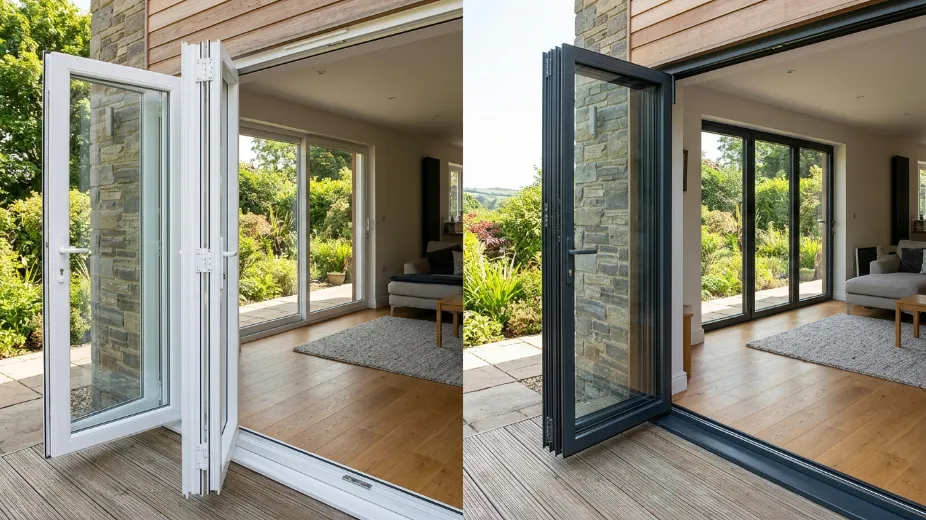
Show more Side by side comparison PVC and aluminium folding doors showing material and finish differences

PVC Folding Door Pricing Dubai - Complete Cost Breakdown

Transparent comprehensive pricing across typical residential and commercial configurations with detailed explanation of cost factors and what's included ensuring informed budget planning.

ConfigurationTypical SizePrice RangeApplications
2-Panel Standard1.5m × 2.1mAED 800-1,200Utility room, storage access
3-Panel Medium2.5m × 2.1mAED 1,200-1,600Balcony, internal partition
4-Panel Standard3m × 2.1mAED 1,500-2,000Secondary living access
4-Panel Wide3.5m × 2.1mAED 1,800-2,300Budget balcony, large utility
5-Panel Large4m × 2.1mAED 2,000-2,500Maximum practical PVC span
Custom Height (2.4m)Any width+AED 200-400Taller door height
Wood-Grain FinishAny size+AED 150-300Improved aesthetic
Double GlazingAny size+AED 300-600Better insulation
Multi-Unit Discount (5-10 units)Per unit-10-15% per systemRental/development projects
Multi-Unit Discount (10+ units)Per unit-15-20% per systemLarge developments
Professional InstallationStandardIncluded in price1-2 day installation

What's Included in PVC System Complete Installation Price:

  • Premium European-grade UPVC profile frames (German or UK manufacturing with proper UV stabilization, 2.5-3mm wall thickness, multi-chamber reinforcement versus economy Asian imports)
  • Standard single-pane clear glazing (acrylic or basic glass depending on configuration, panel size, and client preference balancing weight versus scratch resistance)
  • Complete hardware package (hinges, rollers, handles, locks appropriate for PVC system weight and operational requirements, economy-grade but adequate quality ensuring reasonable service life)
  • Extruded aluminium bottom track (powder-coated aluminium track standard even PVC systems given superior durability and wear resistance versus plastic alternatives)
  • EPDM weatherseal gaskets (rubber seals providing basic weather resistance and draft prevention around complete perimeter, adequate compression given flexible PVC frames)
  • Professional installation service (site measurement, opening preparation, frame installation, panel hanging, hardware adjustment, operational testing, client handover with operation demonstration)
  • 1-2 day installation timeline (faster than aluminium given lighter weight, simpler fitting requirements, less precise tolerance demands, reduced labor complexity)
  • Basic warranty coverage (typically 2-3 years on hardware and frames covering manufacturing defects versus 10 years standard aluminium systems, shorter duration reflects expected service life)
  • Standard white or beige color (wood-grain laminate finishes available at premium noted in pricing table, custom colors generally not offered PVC systems)
  • All fasteners, shimming materials, and installation consumables (complete turnkey installation, no hidden costs or additional charges beyond quoted price)
  • Post-installation cleanup and debris removal (work area left clean and ready for immediate use)
  • Operation instruction and maintenance guidance (client education on proper operation technique, cleaning procedures, periodic lubrication schedule)
View more

Detailed Pricing Factor Explanations: Base price reflects European-grade UPVC with proper UV stabilization and adequate wall thickness ensuring 8-12 year service life versus economy Asian imports AED 500-900 but failing 3-5 years creating false economy. Size and panel count primary cost driver: larger openings require more material, additional hardware, increased labor, and greater structural demands potentially requiring reinforcement (5-panel systems approaching PVC structural limits). Custom height premium reflects non-standard extrusion sizes, modified hardware mounting positions, and reduced manufacturing economies versus standard 2.1m height representing majority market demand. Wood-grain laminate upgrade improves aesthetic significantly versus plain white plastic though still clearly budget-grade versus aluminium powder coating refinement—popular clients wanting better appearance without aluminium cost. Double-glazing rarely specified PVC systems given weight and cost making aluminium more appropriate if thermal performance critical but available clients specifically requesting. Volume discounts multi-unit projects reflect manufacturing efficiencies, consolidated installation scheduling, and relationship-building incentives—particularly attractive rental property developers and multi-unit renovations. Installation included pricing ensures no hidden costs or surprise charges—quoted price is complete installed cost ready for operation. Pricing represents typical Dubai market rates across established suppliers; specific quotes depend exact specifications, project details, access conditions, and timeline requirements. Cost comparison aluminium emphasizes value proposition: equivalent 3-panel 2.5m aluminium bifold typically AED 3,500-5,000 versus PVC AED 1,200-1,600 representing AED 2,200-3,400 absolute savings (60-70% cost reduction). However cost savings must be evaluated against: shorter PVC lifespan requiring replacement 8-12 years, inferior thermal performance increasing cooling costs climate-controlled spaces, lower aesthetic refinement potentially impacting property value luxury segments, structural limitations restricting maximum opening widths. Total ownership cost calculations should consider: initial investment, annual maintenance costs (PVC AED 100-200 versus aluminium AED 300-500), replacement timing (PVC 8-12 years versus aluminium 25+ years), and energy impact if climate-controlled space. For comparison against premium aluminium systems offering superior long-term value primary applications, see our main bifold door pricing guide. For properties requiring existing door assessment determining repair versus replacement economics, our professional evaluation service provides candid recommendations based on actual conditions and cost-benefit analysis.

Show more

Multi-Unit Project Economics: Volume pricing creates compelling portfolio-wide savings larger projects: developer equipping 20 rental apartments with 3-panel balcony access saves AED 8,000-12,000 (10-15% discount 5-10 units bracket) or AED 12,000-18,000 (15-20% discount 10+ units bracket) versus single-unit pricing. Combined with absolute AED 44,000-64,000 savings versus equivalent aluminium installations (20 units × AED 2,200-3,200 per-unit savings), total developer savings reach AED 56,000-82,000 funding substantial amenity improvements or reducing overall project costs improving competitive positioning and ROI. Property managers overseeing portfolio maintenance appreciate budget-friendly PVC replacement costs: failed 8-10 year old aluminium system repair often costs AED 1,000-2,000 (hardware, seals, labor) making complete PVC replacement AED 1,200-1,800 economically competitive while delivering fresh system with full warranty versus patched aging aluminium. However this economics only applies secondary areas where PVC performance adequate—attempting same approach primary living areas creates tenant dissatisfaction and property value impacts exceeding cost savings. Our project consultation for multi-unit developments: comprehensive property assessment identifying appropriate PVC versus aluminium specifications each opening type, transparent volume pricing with documented savings calculations, staged installation scheduling minimizing tenant disruption, coordinated delivery and logistics, quality control protocols ensuring consistent installation standards across all units, warranty administration and post-installation support. Particularly relevant for properties also considering outdoor improvements, our gazebo and outdoor enclosure services can be coordinated with door installations creating comprehensive property enhancement projects.

Show more

PVC Folding Door Installation & Maintenance Dubai

Streamlined installation process and minimal ongoing maintenance requirements reduce total ownership complexity and costs making PVC systems particularly attractive time-constrained property owners and rental contexts.

Step 1: Opening Preparation & Measurement (Day 1 Morning)+

Installation process begins comprehensive site assessment and precise measurement ensuring proper fit and trouble-free operation. Initial evaluation protocol: measure opening width at multiple heights (top, middle, bottom) as existing openings rarely perfectly square particularly older construction or settling buildings, measure opening height both sides and center point checking for variations requiring accommodation, verify plumb and level existing opening using professional grade level identifying any out-of-square conditions requiring correction or shimming strategy, assess structural condition lintel (overhead beam support) and side jambs ensuring adequate strength supporting PVC system weight and operation stresses, evaluate floor condition and level where aluminium track will be installed determining any preparation work needed. Our site visit comprehensive assessment provides: accurate dimensions for PVC system manufacturing avoiding undersized (weatherseal gaps) or oversized (won't fit) errors, identification of any preparation work required before installation day (floor leveling patches, jamb reinforcement, lintel inspection/repair if necessary), realistic installation timeline accounting for access constraints and any complications, transparent itemized quote including additional costs if non-standard conditions discovered. PVC systems notably more forgiving dimensional tolerances than rigid aluminium thermal-break frames: plastic material flexibility allows some shimming and adjustment, economy hardware tolerates minor misalignment, less critical weatherseal compression specifications permit looser fitting. However proper measurement still essential avoiding operational problems: significantly undersized frames create excessive gaps compromising weathersealing and aesthetic appearance, oversized frames simply won't fit opening requiring expensive re-manufacturing, badly out-of-square openings cause panel binding and uneven operation even flexible PVC systems. Standard residential opening measurements allow stock or semi-custom UPVC profile manufacturing keeping costs low and delivery timeline short: common 2.1m height and 1.5-4m width configurations represent 80%+ market demand enabling manufacturing efficiencies, custom sizes possible but typically add AED 200-400 premium and 1-2 week lead time extension. Measurement accuracy verification: we photograph opening with measuring tape visible documenting dimensions, confirm measurements with client before manufacturing, flag any concerns about structural conditions or access limitations. Timeline expectations: measurement and site assessment 30-45 minutes typical residential installation, quote delivery within 24 hours including any preparation work recommendations, European-grade UPVC manufacturing lead time 5-10 working days versus 15-25 days aluminium systems reflecting simpler extrusion and assembly processes. For properties requiring broader renovation planning and coordination across multiple trades, our complete project management services coordinate door installations within overall renovation timelines ensuring proper sequencing and minimal delays.

Step 2: Track Installation & Frame Positioning (Day 1 Afternoon)+

Installation Day 1 afternoon focuses establishing foundation system with track and frame installation. Bottom track installation protocol: extruded aluminium track (even PVC systems use aluminium track for durability and wear resistance) positioned in opening ensuring proper alignment with side jambs and perpendicular to opening, shimming as necessary achieving perfectly level condition critical for smooth roller operation and preventing panel binding (unlevel track causes panels accumulating one end or dragging), securing track to floor using appropriate fasteners based on substrate (concrete anchors for slab, wood screws for timber sub-floor, toggle bolts if hollow substrate), testing track smoothness and stability before proceeding confirming no movement or flex under pressure. Head track and side jamb frame installation: top track installed spanning opening width providing upper panel support and guidance, side jamb PVC frames positioned creating complete opening perimeter, careful shimming ensuring plumb (perfectly vertical) and square alignment using professional level and diagonal measurements, securing frames to structural opening using appropriate fastening avoiding over-tightening that could deform flexible PVC (common amateur error crushing plastic frames), final verification of square and alignment before permanently securing. EPDM weatherseal gasket installation: rubber gaskets installed in frame channels around complete perimeter providing weather resistance and draft reduction, ensuring proper gasket seating in channels without gaps or displacement (displaced gaskets compromise weathersealing immediately), checking gasket continuity around corners and transitions where installation errors most common, verifying adequate gasket compression when panels closed achieving weathersealing without excessive operation resistance. Frame installation process significantly simpler and faster PVC versus aluminium systems creating timeline and cost advantages: lightweight plastic frames handled easily single installer without rigging or multiple personnel, less precise shimming required given forgiving material tolerances and simpler weatherseal compression requirements, no thermal-break integrity concerns allowing straightforward mechanical fastening versus precision aluminium thermal-break systems requiring careful alignment maintaining thermal performance, faster learning curve training installers as PVC less demanding precision and specialized knowledge. However installation quality still matters despite simpler process: proper level critical smooth operation preventing panel binding or uneven gaps, adequate fastening prevents frame movement under repeated operation cycles, careful gasket installation ensures weathersealing rather than air/water infiltration. Common PVC installation errors we avoid: over-tightening fasteners deforming flexible frames creating operational binding, inadequate shimming leaving frames twisted or bowed causing uneven panel gaps, rushed gasket installation with gaps or displacement compromising weathersealing, insufficient plumb/level verification creating long-term operational problems. Timeline Day 1 afternoon: track and frame installation typically 2-4 hours depending on opening size, access conditions, and any preparation work required (floor patching, jamb reinforcement), installer breaks for day leaving secure weather-protected opening ready for Day 2 panel hanging.

Step 3: Panel Hanging & Hardware Adjustment (Day 2 Morning)+

Installation Day 2 morning involves hanging PVC panels, connecting interconnecting hinges, and adjusting all mechanical components achieving smooth operation. Panel installation sequence: individual panels positioned sequentially in bottom track starting from fixed end working toward opening end (standard right-to-left or left-to-right depending on specification), top hinges engaged in head track supporting panel weight, bottom rollers properly seated in aluminium floor track, panel vertical alignment verified ensuring panels hang plumb without twisting (twisted panels bind during operation and create uneven weatherseal compression), interconnecting hinges linking adjacent panels creating continuous folding assembly operating as unified system. Hardware component adjustment achieving smooth operation: hinge tension adjusted using built-in adjustment screws ensuring panels fold easily without binding while maintaining adequate resistance preventing free-swinging (too loose hinges allow panels dropping suddenly, too tight creates excessive operation effort), roller height adjustment using threaded adjusters achieving proper panel clearance above floor track (sufficient clearance preventing drag and premature roller wear, minimal gap reducing air infiltration and improving aesthetics), handle and lock mechanism installation and testing confirming proper engagement, smooth operation, and adequate security, final alignment verification checking even panel gaps throughout complete folding range. Operational testing comprehensive cycles: complete open-close operation checking smooth movement throughout entire range, verifying even weatherseal compression around perimeter when fully closed (visual inspection and manual checking seal contact), testing locking mechanism ensuring proper engagement and holding strength, checking handle operation smoothness and ergonomics, making final micro-adjustments addressing any binding, uneven gaps, or operation resistance. Installation advantages PVC systems creating faster completion: lightweight panels hang easily without mechanical lifting equipment or multiple installers (single installer handles typical residential panels safely), simpler hardware with fewer adjustment points versus complex aluminium pivot and roller mechanisms, forgiving tolerances allow easier alignment and adjustment without precision measuring tools, less critical weatherseal compression requirements (adequate versus optimal standard). Quality installation practices regardless of simplified PVC process: proper panel alignment ensuring even gaps and smooth operation, adequate hardware adjustment preventing premature wear and operational issues, thorough testing catching problems before client handover when correction easy versus call-backs later, methodical approach avoiding rushed work compromising long-term performance. Common installation shortcuts we never take: inadequate adjustment leaving binding or uneven operation (causes premature hardware wear), skipping operational testing throughout complete range (problems discovered later require return visit), rushed weatherseal verification (air/water infiltration complaints avoidable with proper initial installation). Timeline Day 2 morning: panel hanging and adjustment typically 2-3 hours standard residential installation, faster than equivalent aluminium given simpler hardware and less demanding tolerances.

Step 4: Client Handover & Operation Training (Day 2 Midday)+

Installation concludes comprehensive client demonstration ensuring proper operation understanding and realistic maintenance expectations. Operational demonstration and training: proper opening technique demonstration (gentle smooth operation, correct panel sequence, avoiding forcing or jerking motions that stress hardware), closing procedure including proper panel stacking and alignment (ensuring panels seat properly in weatherseals), locking and unlocking mechanism explanation and practice (most PVC systems use simple barrel locks or basic 2-point locks), handle operation and any special considerations (some economy handles require specific technique avoiding breakage), identification of normal operation sounds and resistance levels versus indications requiring attention. Maintenance instruction and schedule: cleaning procedure guidance using mild soap and water on plastic surfaces (avoid abrasive cleaners or harsh chemicals damaging PVC, particularly wood-grain laminates susceptible to delamination if exposed to solvents), periodic hardware lubrication schedule (every 12-18 months applying light machine oil to hinges and roller axles, avoiding excessive lubrication attracting dust/dirt), weatherseal care and inspection (checking gasket condition and seating annually, cleaning gasket surfaces maintaining proper compression), what to monitor for early problem detection (increasing operation resistance indicating hardware wear or misalignment, visible gaps when closed suggesting adjustment needed, unusual sounds indicating component wear or damage). Warranty coverage detailed explanation: standard 2-3 year warranty on PVC frames and hardware covering manufacturing defects and material failures (notably shorter than 10-year aluminium warranties reflecting expected service life differential), exclusions for damage from misuse, abuse, or lack of basic maintenance (clarifying what constitutes reasonable care versus neglect voiding coverage), warranty claim process if issues arise during coverage period (documentation requirements, inspection procedures, resolution timeline expectations), post-warranty repair and service options availability (we continue servicing systems beyond warranty unlike some suppliers abandoning clients after warranty expiration). Realistic expectation setting regarding PVC system characteristics: 8-12 year expected service life with proper care (versus 25+ years aluminium), some UV yellowing and surface degradation normal after 6-8 years particularly direct sun exposure (not warranty defect but expected material aging), minor operation adjustment may be needed every 2-3 years as hardware wears and plastic frames settle (normal maintenance not indicating defective installation). Maintenance simplicity PVC advantage emphasized: far less demanding than aluminium systems (annual cleaning versus comprehensive lubrication, seal inspection, track maintenance), DIY-friendly basic homeowner tasks (versus specialized aluminium service often requiring professional), minimal time commitment (30 minutes annually versus 60-90 minutes aluminium). However longevity trade-off acknowledged: easier maintenance during shorter 8-12 year service life versus more involved maintenance during 25+ year aluminium lifespan. Our approach complete transparency: we explicitly discuss lifespan limitations, UV degradation expectations, performance characteristics ensuring clients understand what they purchased rather than discovering limitations later creating dissatisfaction. For properties requiring ongoing maintenance support and periodic service beyond DIY client capability, our comprehensive maintenance program provides scheduled inspections, adjustment, lubrication, and component replacement as needed. Timeline: client handover and training 15-30 minutes ensuring complete understanding and answering all questions, final site cleanup and debris removal, installation completion documentation for warranty activation.

Step 5: Ongoing Maintenance & Care (Throughout Service Life)+

Minimal maintenance schedule extends service life and maintains satisfactory operation and appearance throughout 8-12 year PVC system lifespan. Annual maintenance tasks requiring approximately 30 minutes total: clean PVC frame and panel surfaces using mild soap solution and soft cloth (removes accumulated Dubai dust, sand, and atmospheric pollution maintaining appearance, prevents abrasive particle buildup that could scratch surfaces during operation), inspect weatherseal gaskets for damage, displacement, or compression loss (early detection prevents deterioration requiring replacement, typical gasket life 6-10 years with proper care), operational testing throughout complete folding range checking for increased resistance, binding, or unusual sounds indicating developing problems (early intervention prevents minor issues becoming major failures), visual hardware inspection looking for loose fasteners, worn components, or visible damage (tightening loose screws, identifying components needing replacement before failure), basic lubrication of hinges and roller axles using light machine oil (only necessary every 12-18 months, avoiding excessive lubrication attracting dirt), track cleaning removing accumulated debris, sand, or foreign objects that could impede roller operation or cause wear. Periodic professional service every 3-5 years recommended multi-unit installations or critical applications: comprehensive operational assessment checking all adjustment points, hardware condition evaluation identifying components approaching end of service life requiring proactive replacement, weatherseal compression testing and adjustment if needed (gaskets compress over time reducing sealing effectiveness), complete lubrication of all moving parts using appropriate lubricants, track alignment verification and correction if settling or movement occurred, client consultation discussing any operational concerns or performance issues. Component replacement as needed based on actual wear rather than scheduled intervals: roller replacement typically 5-8 years heavy use or sooner if operation becomes noticeably rougher (new rollers AED 40-80 depending on quality), hinge replacement if looseness develops or pins wear creating excess play (replacement hinges AED 50-120 set), handle replacement if operation becomes stiff, loose, or components break (economy handles AED 30-60, better quality AED 80-150), lock mechanism replacement if engagement fails or key operation becomes difficult (barrel locks AED 40-80, multi-point locks AED 120-200), weatherseal renewal if compression loss evident or visible gaps appear when closed (complete gasket set AED 150-300 depending on system size). Maintenance cost comparison demonstrates PVC advantage: annual DIY maintenance essentially free beyond 30 minutes time and minimal cleaning supplies, professional service if desired approximately AED 150-250 every 3-5 years, component replacement over 10-year period typically AED 200-400 total. Aluminium equivalent: annual maintenance 60-90 minutes plus AED 100-200 materials (lubricants, cleaners), professional service AED 300-500 every 2-3 years, component and seal replacement AED 500-800 over 10 years. However maintenance differential must be considered alongside lifespan: PVC saves AED 300-500 annually but requires complete replacement 8-12 years, aluminium costs more maintenance but continues 25+ years avoiding complete replacement expense. Total ownership cost calculation: PVC lower 0-12 years, aluminium lower beyond as maintenance costs pale versus replacement costs. Our maintenance approach both materials: clear schedule and procedure guidance, component availability for timely repairs, honest assessment when repair versus replacement more economical. For detailed maintenance procedures, schedules, and troubleshooting across all door types, our complete maintenance guide provides comprehensive information.

Step 6: Repair vs Replacement Decision Framework+

PVC systems present fundamentally different repair economics than aluminium significantly influencing maintenance and replacement decisions. Common repairable PVC problems and typical costs: hardware failures including worn or broken hinges (replacement AED 100-200 labor plus parts), damaged or flattened rollers preventing smooth operation (replacement AED 120-180 parts and labor), broken handles or locks (replacement AED 80-150 depending on component quality), weatherseal deterioration from age or UV damage (gasket renewal AED 200-350 complete perimeter), panel alignment issues from settling or hardware wear (adjustment service AED 100-200 correcting binding or uneven gaps), minor frame damage or surface cracks accessible locations (plastic welding or epoxy repair AED 150-300 if structurally sound and cosmetically acceptable). However repair economics dramatically different PVC versus aluminium creating distinct decision calculus: complete new PVC system costs only AED 800-2,500 installed (versus aluminium AED 3,500-12,000) fundamentally changing repair-versus-replace threshold. Economic comparison: AED 500 repair bill represents 25-60% PVC replacement cost but only 8-15% aluminium replacement cost—vastly different value propositions. Repair decision framework based on system age and problem severity: systems under 5 years old with isolated hardware failures generally worth repairing as extending useful life toward 10-12 year maximum (repairs AED 200-400 buying several additional years service), systems 5-8 years old requiring multiple repairs or major components questionable economics as approaching normal replacement anyway (cumulative repair costs AED 400-600+ often better allocated toward new system with warranty), systems beyond 8 years rarely worth repairing except minor fixes (UV degradation, frame warping, accumulated wear all progressing requiring replacement soon regardless). Unrepairable or not-cost-effective issues: cosmetic degradation including yellowing from UV exposure, surface chalking or texture changes, discoloration (cannot be reversed, only solution complete replacement), structural problems like frame sagging, significant deflection, panel warping (indicate fundamental material fatigue, repair impossible or temporary at best), extensive damage from impact or severe weathering (repair costs approach or exceed replacement making new system better value). Age-based replacement guidelines regardless of specific problems: proactive replacement 10-12 years even if still functioning as UV degradation and material fatigue progressing creating imminent failures (planned replacement on your schedule versus emergency replacement when system fails), reactive replacement if major problems develop before 10 years (evaluate repair costs versus remaining useful life making economical decision). Our honest repair assessment approach: initial inspection identifying all issues present and developing (not just reported problem), transparent repair cost estimate with parts and labor breakdown, direct comparison repair cost versus new system cost highlighting percentage relationship, candid recommendation whether repair economically sensible or replacement better value, client decision support without sales pressure either direction. Many PVC repair inquiries result in replacement recommendations when honest analysis shows economics favor new system: aging system with AED 500 repair estimate when new system AED 1,200 makes replacement obvious choice (AED 700 additional investment buys 8-12 years new service life versus temporary fix old system), multiple issues requiring AED 600-800 repairs definitely warrant replacement, even modest AED 300-400 repairs questionable systems beyond 7-8 years. Our commitment: presenting both options transparently allowing informed client decisions based on economics and priorities rather than our sales or service incentives. For professional assessment whether existing PVC system (or aluminium) repairable or replacement more sensible, our evaluation service provides honest recommendations.

Fast Installation, Simple Maintenance, Affordable Service Life

PVC folding doors install in 1-2 days versus 2-4 days aluminium systems creating schedule and cost advantages. Minimal ongoing maintenance requirements reduce ownership complexity to approximately 30 minutes annually versus 60-90 minutes aluminium. However shorter 8-12 year expected lifespan means eventual complete replacement versus aluminium 25+ year service life with proper care. Best value proposition secondary areas where budget constraints genuine, performance compromises acceptable, and periodic replacement part of normal property maintenance cycle. For primary applications requiring maximum durability and minimal long-term total ownership costs, explore our premium aluminium bifold systems. Contact us for honest assessment whether PVC or aluminium appropriate your specific application and priorities.

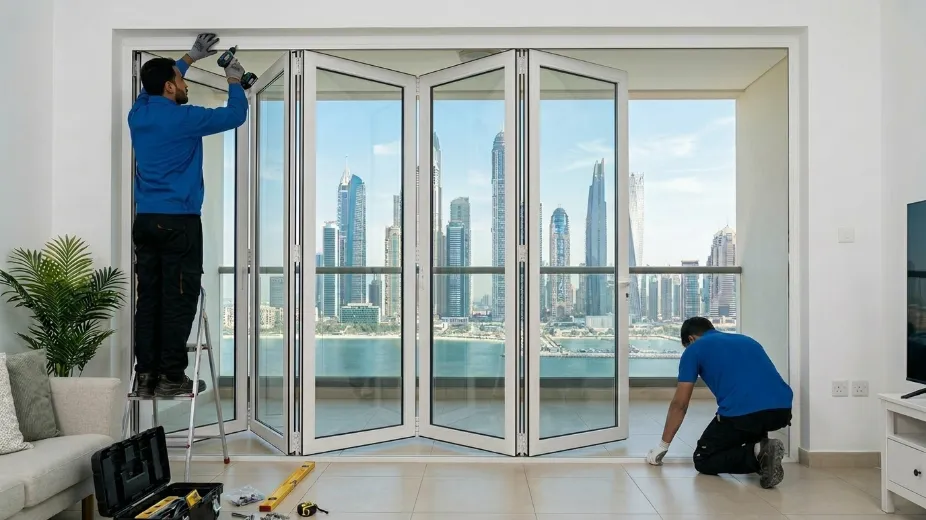
PVC folding doors installation process showing quick setup and adjustment in Dubai property

Frequently Asked Questions About PVC Folding Doors

Comprehensive answers to common questions about PVC systems for Dubai applications covering costs, performance, durability, appropriate usage, and realistic expectations.

What are PVC folding doors and how do they differ from aluminium?+

PVC folding doors are concertina-style door systems constructed from rigid UPVC (unplasticized polyvinyl chloride) plastic profiles rather than aluminium metal frames. Technology offers budget-friendly alternative to premium aluminium bifold systems with installation costs typically 60-70% lower while providing adequate performance appropriate applications where maximum durability, thermal efficiency, or aesthetic refinement not critical priorities. Construction and material fundamental differences: PVC frames extruded from plastic polymer formulations incorporating UV stabilizers, plasticizers, and impact modifiers creating hollow-chamber profiles providing some structural rigidity and minimal thermal insulation, aluminium frames precision-engineered from extruded aluminium alloys with sophisticated thermal-break technology, polyamide inserts, and optimized chamber geometry achieving superior thermal performance. Hardware specifications differ dramatically: PVC systems use economy zinc-alloy or basic steel hinges, nylon or plastic rollers with simple bushings, basic barrel or 2-point locks, plastic or economy aluminium handles (versus aluminium systems specifying precision stainless steel or marine-grade aluminium hinges, sealed ball-bearing roller assemblies, sophisticated multi-point espagnolette locks, premium architectural hardware). Glazing options limited PVC: typically single-pane acrylic or basic glass given weight constraints and cost optimization focus (versus aluminium accommodating insulated double-glazing, laminated safety glass, acoustic glazing, and various specialized glass types). Performance characteristics create distinct capability profiles: PVC adequate secondary areas with modest requirements, aluminium excels primary applications demanding maximum performance. Specific performance differentials: structural strength PVC limits practical spans 3-4 meters before deflection and sagging become problematic (aluminium confidently spans 8+ meters), thermal insulation PVC U-value 3.5-5.0 W/m²K versus aluminium thermal-break 2.0-2.8 W/m²K (40-60% worse thermal performance), expected service life PVC 8-12 years maximum before UV degradation and material fatigue necessitate replacement (aluminium 25+ years properly maintained), aesthetic refinement PVC appears budget-grade regardless of quality (aluminium achieves premium architectural finish). Appropriate applications differ accordingly: use PVC utility rooms, storage areas, secondary balconies, internal partitions, rental properties where budget constraints genuine and performance compromises acceptable; use aluminium main living areas, primary entrances, large openings, luxury properties, any application where performance and longevity worth investment. Material selection should honestly match application rather than attempting force budget materials into premium applications creating inevitable disappointment. For comprehensive comparison helping determine appropriate material selection, see comparison section this page or our complete buying guide.

How much do PVC folding doors cost in Dubai compared to aluminium?+

PVC folding door systems in Dubai range AED 800-2,500 complete installation depending primarily on size and panel configuration representing 60-70% cost savings versus equivalent aluminium bifold systems. Specific PVC pricing by configuration: standard 2-panel 1.5m wide utility or storage access costs AED 800-1,200 installed (simplest configuration, minimum components and labor), medium 3-panel 2.5m wide balcony or internal partition costs AED 1,200-1,600 installed (typical residential secondary application), standard 4-panel 3m wide secondary living area access costs AED 1,500-2,000 installed (larger opening, more panels and hardware), wide 4-panel 3.5m configuration for budget balcony or large utility costs AED 1,800-2,300 installed (approaching maximum practical PVC span given structural limitations), maximum 5-panel 4m system at practical PVC limits costs AED 2,000-2,500 installed (beyond this size aluminium specification mandatory given deflection and sagging issues). Aluminium equivalent system pricing for direct comparison: standard 3-panel 2.5m aluminium bifold costs AED 3,500-5,000 installed (thermal-break frames, powder coating, insulated double-glazing, precision hardware, professional installation), larger 5-panel 4m aluminium system costs AED 6,000-9,000 installed representing AED 4,000-6,500 premium over PVC equivalent. Cost differential breakdown: material costs PVC substantially cheaper (raw plastic resin versus aluminium billet, simpler extrusion processes, economy hardware versus precision components), manufacturing costs lower (less sophisticated tooling, shorter production times, simpler assembly), installation labor reduced (lighter weight handled faster, less precise fitting requirements, fewer skilled labor hours). However cost savings inseparable from performance and longevity trade-offs: PVC 8-12 year expected lifespan versus 25+ years aluminium means replacement required approximately twice as frequently, inferior thermal performance increases ongoing cooling costs climate-controlled spaces (though impact modest secondary areas with minimal climate control), less refined appearance potentially impacts property value perception luxury segments. Total cost of ownership calculation spanning initial investment, ongoing maintenance, replacement timing: PVC wins decisively 0-12 year period given lower capital requirement, aluminium overtakes 12+ years as avoids complete replacement and accumulates energy savings. Optional PVC upgrades affecting pricing: custom 2.4m height (versus standard 2.1m) adds AED 200-400, wood-grain laminate finish improving aesthetic adds AED 150-300, double-glazing (rarely specified given weight and cost) adds AED 300-600. Volume discounts multi-unit projects: 5-10 units typically 10-15% discount, 10+ units typically 15-20% discount (particularly attractive rental property portfolios and development projects). All pricing includes: European-grade UPVC frames with proper UV stabilization, complete hardware set, aluminium bottom track, weatherseals, professional installation (1-2 days), basic 2-3 year warranty. Cost savings compelling appropriate applications: property developer equipping 20 rental apartments balcony access saves AED 44,000-64,000 portfolio-wide specifying PVC versus aluminium, individual homeowner saves AED 2,200-3,400 per opening allowing upgraded specifications elsewhere within fixed renovation budget. For detailed pricing comparison and total ownership cost analysis, see pricing section this page.

What are the main advantages of PVC over aluminium folding doors?+

PVC folding doors offer several genuine advantages over aluminium systems in appropriate applications though advantages must be weighed against significant limitations. Primary cost advantage most compelling: PVC systems 60-70% lower cost than equivalent aluminium creating genuine budget accessibility (typical 3-panel 2.5m opening: PVC AED 1,200-1,600 versus aluminium AED 3,500-5,000 representing AED 2,200-3,400 absolute savings), economics compound multi-unit projects where portfolio-wide savings reach tens of thousands dirhams freeing capital for other improvements or reducing overall project costs. Complete corrosion immunity valuable specific contexts: full plastic construction cannot rust eliminating ferrous metal degradation entirely (versus aluminium where steel reinforcement or economy hardware can corrode if protective coatings compromised), particularly relevant coastal properties experiencing salt air though properly specified aluminium performs excellently marine environments making advantage more theoretical than practical premium systems. Maintenance simplicity appeals time-constrained owners: annual cleaning with soap and water sufficient maintaining appearance and operation (versus aluminium requiring periodic lubrication, seal inspection, potential powder coating touch-up), fewer components and simpler mechanisms reduce maintenance complexity making DIY-friendly, approximately 30 minutes annual maintenance time versus 60-90 minutes aluminium. Installation speed advantage project scheduling: lightweight PVC frames install 1-2 days versus 2-4 days heavier aluminium systems (less relevant single installations but compounds multi-unit projects where timeline acceleration valuable), simpler fitting requirements and less precise tolerances enable faster completion, reduced installation labor costs as fewer skilled hours required. However advantages narrow and must be evaluated against substantial aluminium superiority other areas: Aluminium advantages include superior structural strength enabling 8+ meter spans (versus 3-4 meter PVC maximum), dramatically better thermal performance U-value 2.0-2.8 versus 3.5-5.0 PVC (40-60% better insulation reducing cooling costs), far longer 25+ year lifespan versus 8-12 years PVC (avoiding periodic complete replacement), premium aesthetic refinement versus budget PVC appearance, unlimited color customization through powder coating versus limited white/beige/wood-grain PVC options, positive property value impact versus neutral or negative PVC perception luxury segments. Realistic assessment: PVC advantages genuine but narrow in scope—cost savings and minimal maintenance appeal budget applications and secondary areas where performance compromises acceptable. Aluminium advantages broader and more substantial—better performance, longevity, and aesthetics justify premium cost primary applications, long-term value focus, or property segments demanding quality specifications. Decision framework: specify PVC where budget absolutely critical AND performance/aesthetic compromises explicitly understood and accepted, specify aluminium where superior performance worth investment OR property positioning demands quality materials. Our consultation approach presents transparent comparison enabling informed material selection based on actual priorities and requirements rather than simply recommending lowest cost or highest margin option regardless of suitability. For properties also requiring specialized entrance solutions where premium specifications particularly important, our pivot door systems demonstrate aluminium capability levels impossible with PVC materials.

Are PVC folding doors suitable for Dubai climate conditions?+

PVC folding doors perform adequately in Dubai climate for appropriate applications with important limitations and considerations requiring realistic expectations. Heat tolerance and thermal stability: premium European UPVC grades withstand continuous temperatures up to 60°C without structural degradation or dimensional instability (Dubai ambient temperatures rarely exceed 50°C even peak summer afternoons), heat distortion temperature specifications ensure frames maintain geometry normal operating conditions, white or light-colored PVC reflects solar radiation reducing surface heating versus dark colors absorbing heat. However thermal expansion significant concern: PVC coefficient of thermal expansion approximately 5X that of aluminium creating substantially greater dimensional changes with temperature swings (manifests as visible gaps during extreme heat, tightness during cooler periods, seasonal adjustment requirements), installation must accommodate movement through adequate clearances, flexible seals, and allowance for expansion/contraction cycles. UV degradation primary long-term concern: intense Dubai sun exposure year-round accelerates polymer degradation in inadequate formulations causing yellowing, surface chalking, and progressive embrittlement, premium European UPVC incorporates titanium dioxide and sophisticated UV stabilizers extending outdoor exposure life 8-12 years maximum, economy Asian imports without proper stabilization yellow noticeably and become brittle 3-5 years making material sourcing absolutely critical. Moisture and humidity performance generally good: PVC inherently moisture-resistant as plastic material unaffected by water exposure eliminating swelling, warping, or degradation concerns (versus wood requiring protection or untreated steel rusting), performs well high humidity environments including coastal locations, bathrooms, laundries, pool areas where condensation or moisture exposure common. Practical performance considerations specific Dubai conditions: best results shaded or semi-exposed locations where direct sun minimized extending lifespan and reducing UV stress (interior positions, covered balconies, north-facing openings), acceptable performance full-sun exposure with premium UPVC but lifespan expectation should be conservative 8-10 years maximum, wind resistance inferior aluminium particularly larger panels where flex and frame deflection compromise weathersealing, weatherseal performance adequate given lower compression requirements versus high-performance aluminium systems but still subject to EPDM gasket degradation from UV and heat. Dubai-specific application guidance based on 8+ years local experience: PVC folding doors work satisfactorily utility rooms with minimal climate exposure, storage areas and walk-in closets in conditioned spaces, secondary balconies in budget apartments where replacement every decade acceptable, internal partitions and temporary dividers where climate protection minimal requirement. Less suitable or inappropriate: fully exposed locations with intense direct sun all day (accelerated UV degradation), large openings where structural demands exceed PVC capabilities, primary applications where 25+ year durability expected, luxury properties where material quality and appearance expectations preclude plastic systems. Our 200+ Dubai PVC installations confirm adequate performance appropriate applications with realistic expectations versus problematic performance when specified beyond suitable scope: systems properly specified for secondary areas with shading or semi-exposure performing satisfactorily through expected 8-12 year service life, systems misapplied to fully-exposed primary locations experiencing premature degradation, binding, and dissatisfaction. Climate suitability ultimately context-dependent matching material capabilities to actual exposure conditions and performance requirements rather than absolute universal judgment. For properties in particularly demanding coastal environments, our assessment services evaluate existing conditions and recommend appropriate material specifications.

Where should I use PVC folding doors versus aluminium systems?+

Material selection should carefully match application requirements, property type, budget constraints, and performance expectations ensuring appropriate specifications and long-term client satisfaction. Use PVC folding doors for these applications: Utility and laundry rooms where functional access prioritized over aesthetic refinement and budget constraints genuine (PVC delivers adequate weather protection and operation at minimal cost, replacement every 8-12 years acceptable given room function and secondary importance), storage areas and walk-in closets requiring occasional access without high traffic patterns (simple operation adequate, minimal security or thermal requirements, substantial cost savings versus aluminium overkill for application), secondary balconies in rental properties or budget apartments where landlord capital expenditure minimization paramount (PVC provides adequate outdoor access at fraction aluminium cost, economical replacement when needed without premium investment wasted rental contexts with tenant turnover), internal space dividers and temporary partitions where permanent wall construction not desired (flexibility valued, lightweight PVC easily installed and removed if spatial requirements change, aesthetic refinement less critical interior positions), secondary building entrances including utility access, service doors, loading areas not visible from primary elevations (function vastly more important than form these locations, adequate security and weather resistance, budget appearance acceptable non-public areas), multi-unit budget residential developments where developer minimizing per-unit costs (total portfolio-wide savings tens of thousands dirhams funding other amenity improvements or reducing overall project costs), any situation where absolute minimum cost required and performance/aesthetic/longevity compromises explicitly understood and accepted by informed client. Use aluminium bifold systems for these applications: Main living area systems opening primary spaces to terraces, gardens, or outdoor entertainment areas (thermal efficiency critical comfort and cooling costs, structural integrity required large openings and wind exposure, aesthetic refinement expected visible primary positions, long-term durability minimizing total ownership costs), primary property entrances and front doors (first impressions establish value perception, material quality signals overall specification level throughout property, security and insulation performance important), large openings exceeding 3.5-4 meters where PVC structural limitations create deflection, sagging, and operational problems (physics of material strength mandates aluminium specification beyond certain spans regardless of budget preferences), exposed coastal locations experiencing intense salt air, direct UV, and severe weather (even premium UPVC degrades measurably faster than properly specified powder-coated aluminium with marine-grade hardware), premium property segments including Emirates Hills villas, Palm Jumeirah apartments, Downtown Dubai luxury developments (material quality expectations absolutely preclude plastic systems regardless of adequate functional performance—market positioning and buyer expectations trump pure performance metrics), any application where maximum performance, 25+ year longevity, and premium aesthetics worth investment (primary spaces, high-traffic areas, long-term ownership focus, property value optimization). Decision framework and guidance: specify PVC where budget absolutely critical AND performance/aesthetic compromises acceptable, specify aluminium where superior performance justifies investment OR property segment demands quality specification regardless of cost differential. Gray area mid-market properties often benefit hybrid approach: PVC secondary areas (balconies, utility rooms, storage) where budget optimization valuable paired with aluminium primary locations (living areas, main entrance) where performance and aesthetics critical creating overall specification balance optimizing capital allocation. Our consultation process: comprehensive property assessment determining appropriate material specifications each opening based on exposure, traffic, visibility, client priorities, budget realities, honest recommendation whether PVC suitable or aluminium mandatory despite cost differential, transparent comparison presenting both options allowing informed client decisions rather than universal prescription. Sometimes means advising against PVC when aluminium truly necessary despite higher cost protecting client from poor specification decisions; other times enthusiastically recommending PVC as smart value choice appropriate context. Material matching to application ensures long-term satisfaction versus selling whatever client willing to buy creating eventual disappointment damaging relationships and reputation. For comprehensive specification guidance and decision support, our complete buying guide provides frameworks and criteria.

Can PVC folding doors be repaired and what do repairs typically cost?+

PVC folding doors can be repaired for certain issues though repair economics fundamentally different from aluminium often favoring replacement versus extensive repairs. Common repairable PVC problems and typical costs: hardware component failures including worn hinges (replacement parts AED 50-100 plus AED 80-120 labor totaling AED 130-220), damaged or flattened rollers preventing smooth operation (new rollers AED 40-80, installation labor AED 80-100, total AED 120-180), broken handles or malfunctioning locks (replacement components AED 30-80 depending on quality, labor AED 60-90, total AED 90-170), weatherseal deterioration from age or UV damage (complete gasket renewal AED 100-200 materials, AED 100-150 labor, total AED 200-350), operational issues like binding, sagging, or misalignment (adjustment and tuning service AED 100-200 depending on severity and time required), minor accessible frame damage or surface cracks (plastic welding or structural epoxy repair AED 100-200 if viable and cosmetically acceptable). However repair economics dramatically different PVC versus aluminium creating distinct replacement-versus-repair calculus: complete new PVC system costs only AED 800-2,500 installed (versus aluminium AED 3,500-12,000) fundamentally changing economic threshold when repairs worthwhile. Direct cost comparison illustrates dynamic: AED 500 repair bill represents 25-60% PVC replacement cost but only 8-15% aluminium replacement cost—vastly different value propositions influencing rational decisions. Repair worthiness framework based on system age and problem scope: systems under 5-6 years old with isolated single component failures generally worth repairing as extends useful life toward maximum 10-12 year PVC lifespan (repair AED 150-300 buying several additional service years reasonable economics), systems 6-8 years old requiring multiple repairs or major component replacement questionable economics as approaching normal end-of-life anyway (cumulative repairs AED 400-600+ often better allocated toward new system with full warranty and reset service life clock), systems beyond 8-10 years rarely worth repairing except most minor fixes (UV degradation, frame warping, accumulated wear all progressing toward failure requiring replacement soon regardless individual component repairs). Unrepairable or economically nonsensical issues: cosmetic degradation including UV yellowing, surface chalking, texture changes, discoloration (cannot be reversed or covered, only solution complete replacement), structural problems like significant frame sagging, severe deflection, panel warping (indicate fundamental material fatigue, repair either impossible or temporary stopgap at best), extensive damage from impact, severe weathering, or accumulated neglect (repair costs approach or exceed replacement making new system obviously better value delivering warranty coverage and reset lifespan). Age-based replacement recommendations regardless of specific immediate problems: proactive replacement 10-12 years even if currently functioning as UV degradation and material aging progressing creating imminent multiple failures (planned replacement on your schedule and timeline versus emergency replacement when system fails unexpectedly), reactive replacement if major problems or multiple issues develop 8-10 years (evaluate repair costs versus limited remaining useful life making economic decision). Our honest repair assessment approach: thorough inspection identifying all current issues plus developing problems visible to experienced eye (not just reported symptom), transparent repair cost estimate with detailed parts and labor breakdown, direct side-by-side comparison repair cost versus complete new system cost highlighting percentage relationship and value proposition, candid professional recommendation whether repair economically sensible or replacement better value long-term, client decision support without sales pressure either direction allowing informed choice. Realistic outcome: many PVC repair inquiries ultimately result in replacement recommendations when honest analysis reveals economics favor new system rather than patching aging installation. Examples: aging 8-year system with AED 500 repair estimate when new equivalent system costs AED 1,200 makes replacement obvious (additional AED 700 investment buys complete 8-12 year new service life with warranty versus temporary fix on system approaching end-of-life), system with multiple issues requiring AED 600-800 cumulative repairs definitely warrants replacement, even modest AED 300-400 repairs become questionable systems already 7-8+ years old with limited remaining lifespan. Our commitment: presenting both repair and replacement options transparently with honest economics allowing informed client decisions based on actual costs and value rather than our sales or service revenue incentives. For professional assessment whether existing PVC system repairable or replacement more sensible given condition, age, and economics, our comprehensive evaluation service provides candid recommendations protecting client interests.

Need Budget-Friendly Door Solution for Secondary Areas?

PVC folding doors deliver practical function and significant cost savings appropriate applications. We'll assess your specific requirements honestly recommending PVC where suitable or aluminium where performance demands justify premium investment. No-pressure consultation focusing on right material for your application, budget, and long-term satisfaction.

DreamFold - Al Qusais Ind. First, Dubai, UAE | Serving all Dubai & UAE | Honest Material Guidance | 200+ PVC Installations

DreamFold Footer