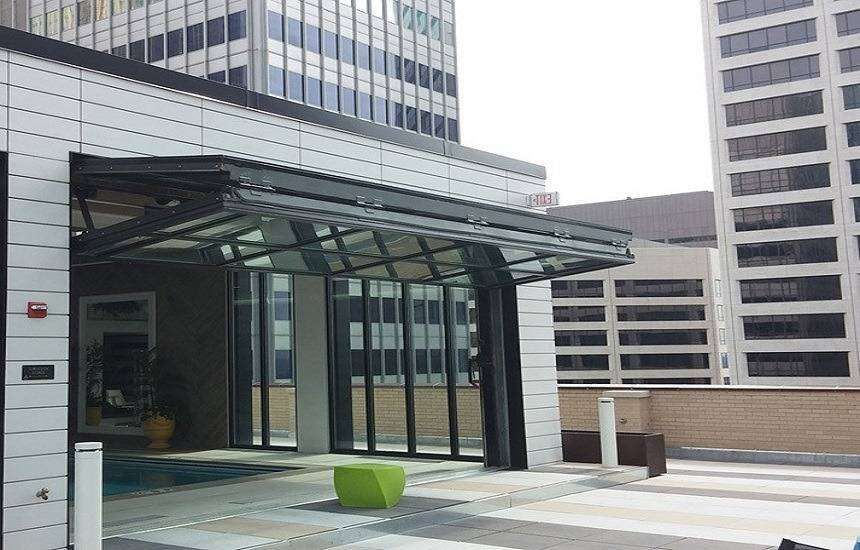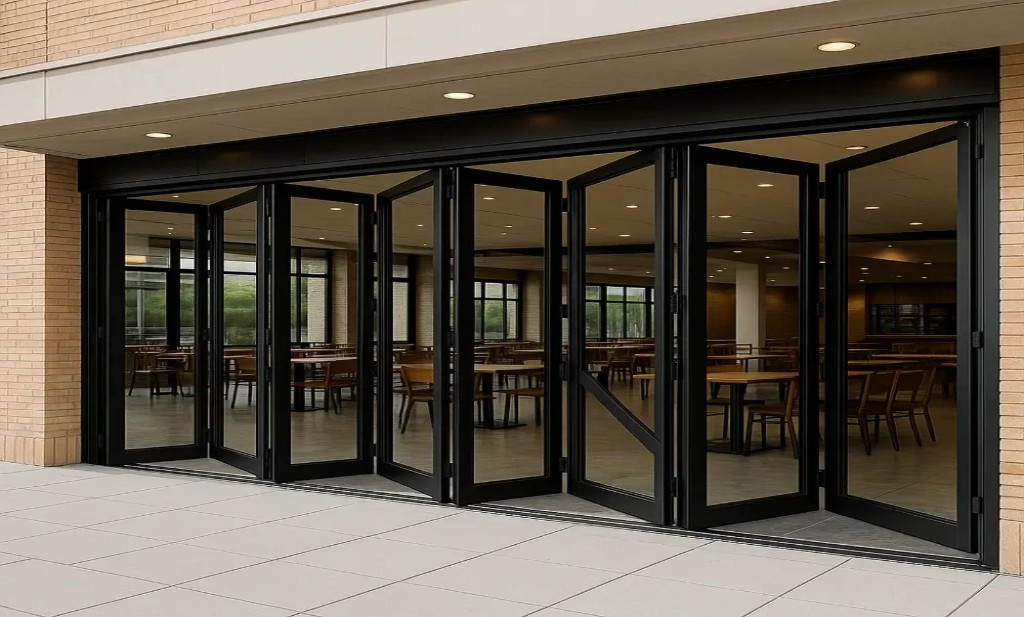
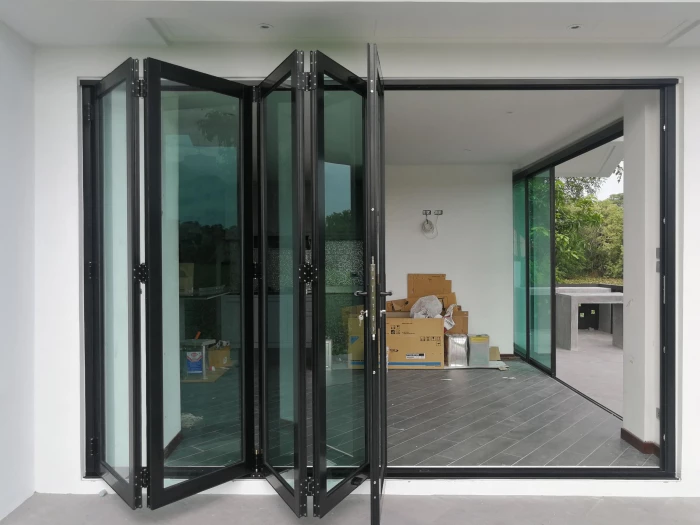
The short answer: minimal-frame sliding systems have overtaken bifolds as the default choice for large openings, with pivot doors taking over at entrances and slide-and-turn systems filling the gap where a fully clear opening is essential. But the honest answer is more useful than the trend answer — bifolds have not been replaced, they have been narrowed to the jobs they are genuinely best at.
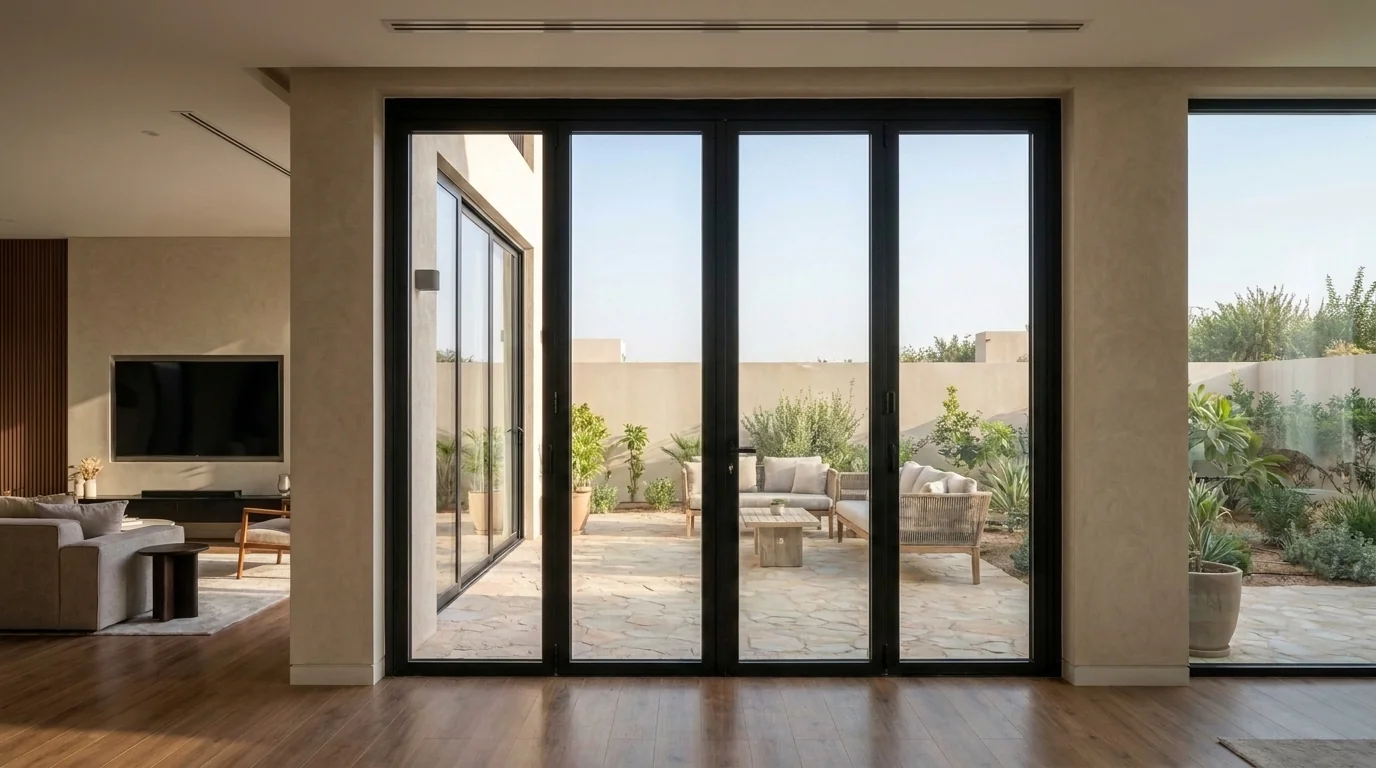
If you are choosing right now, the question is not what is fashionable. It is which system suits your opening width, your elevation and the fact that it will spend four months a year in 45°C heat with sand blowing at it.
Why the Shift Happened
Three things changed, and none of them is about looks.
Frame technology got slimmer. Sightlines that were 100mm a decade ago are now 45–75mm on quality systems. Once a sliding door can offer a nearly invisible frame, the argument for a bifold — which shows a vertical frame at every panel join even when closed — weakens considerably for anyone who cares about the view.
Glass units got bigger and heavier. Manufacturing and lifting capability now allow single panes far larger than a folding panel can practically be, because a folding panel has to be light enough to hang on hinges and swing repeatedly.
Buyers started noticing the stack. A bifold folds into a bundle 200–300mm deep at one or both ends of the opening. On a narrow terrace or balcony, that bundle is genuinely in the way. A slider has no stack at all.
The Five Systems Displacing Bifolds — and What Each Is Actually For
1. Minimal-frame sliding doors
The main beneficiary of the shift. Slim sightlines, very large panes, no stack, and when closed the frame almost disappears. The trade-off is that a standard slider never opens more than about half the opening — one panel has to sit somewhere — unless you build a pocket into the wall to swallow it. We make and fit these as aluminium sliding doors in Dubai.
Choose it when: the view matters more than the size of the clear opening, and the doors will spend most of their life closed with the air conditioning running. That describes most Dubai villas honestly assessed. See ultra-slim sliding door systems.
2. Multi-slide and telescopic systems
Several panels sliding behind one another on multiple tracks, so a wide opening clears far more than a two-panel slider. With a wall pocket the glass can disappear entirely. This is what people usually mean when they say sliding doors have replaced bifolds on big openings.
Choose it when: the opening is wide, you want most of it clear, and you can either accept a stacked panel at one end or build a pocket. See multi-slide telescopic doors.
3. Pivot doors
Not a competitor for wide openings at all — a competitor for the front door. A single oversized leaf turning on a floor and ceiling pivot rather than side hinges, allowing a door far larger and heavier than hinges would carry. In the UAE this has become the signature villa entrance, and demand is visible in search: slim pivot doors are now among the most-searched door terms in the region.
Choose it when: the opening is an entrance and you want architectural impact. See modern pivot door systems and villa entrance doors.
4. Slide-and-turn systems
Each panel slides independently along a track, then pivots ninety degrees and parks flat against a return wall. The result is close to 100% clear opening with no folded bundle. More hardware, more cost, more moving parts to maintain in a sandy climate.
Choose it when: you genuinely need the whole opening clear — restaurant and cafe frontages, retail units, balcony enclosures.
5. Frameless and structural glass
Fixed or minimally framed glass walls where the glass itself does the structural work. Not an opening system at all, which is the point: many designs now pair a large fixed glass wall with one modest opening door, rather than making the whole wall movable.
Choose it when: the wall is there to be looked through, not walked through. See frameless systems.
Side by Side
| System | Clear opening | Stack when open | Frame visible when closed | Typical use |
|---|---|---|---|---|
| Bifold / sliding folding | ~90% | 200–300mm bundle | Vertical frame at every panel join | Terraces, majlis, cafe frontages |
| Minimal-frame slider | ~50% | None | Minimal — slim sightlines | Villa living rooms, sea views |
| Multi-slide / telescopic | 50–75%, or ~100% with a pocket | None, or hidden in a pocket | Slim | Wide garden and pool openings |
| Pivot | Single leaf | None | Single large frame | Villa entrances |
| Slide and turn | ~100% | Panels flat against a wall | Frame at each panel | Retail, restaurants, balconies |
What Actually Matters in the UAE
Most articles on this topic are written for the British market, where the argument is about garden access on the twenty warm days a year. The calculation here is different.
You will keep them closed most of the year
Be honest about usage. From roughly May to September, a wide opening stays shut and the air conditioning runs. That single fact favours systems that perform well closed — slim frames, good glass, tight seals — over systems optimised for how much they open. It is the strongest practical argument behind the shift from bifolds to sliders in this region.
Sand punishes moving parts
Every mechanism here has to survive fine sand. Systems with more moving parts — slide-and-turn especially, bifolds to a degree — need a track that can actually be cleaned. This is a maintenance reality, not a reason to avoid them, but it should influence the choice on an exposed plot. Our guide to folding door maintenance in the UAE covers the routine.
Thermal performance is not optional
Whatever system you choose, a polyamide thermal break of 45mm or more and Low-E glass reflecting around 75% of solar radiation are what keep a glazed elevation from becoming a heater. On DreamFold projects this typically means 28–35% lower cooling costs than a non-thermally-broken equivalent. A fashionable frame with poor thermal performance is a bad buy at any price.
So Are Bifold Doors Finished?
No — and any supplier telling you otherwise is selling something.
Bifolds still win clearly in three situations:
- You want most of the opening genuinely clear and cannot build a wall pocket. A bifold clears around 90%. A standard slider clears about half.
- The opening is wide and the budget is real. Panel for panel, folding systems open more of the wall per dirham than telescopic sliders with pockets.
- Interior division. For splitting a living room from a dining area or a majlis, folding panels remain the most practical answer. Sliders need somewhere to slide to; folding panels stack flat. See internal folding doors.
What has changed is that bifolds stopped being the automatic default for every large opening. That is a correction, not a decline.
How to Decide in Four Questions
- How often will it actually be open? Rarely, in practice, for most of the year — which favours a slider optimised for the closed state.
- How much of the opening must clear? Nearly all of it points to a bifold or slide-and-turn. Half is fine, so a slider works.
- Is there anywhere for panels to go? No wall pocket and no space for a folded stack narrows the field fast.
- Is this an entrance or an opening? Entrances are a pivot conversation, not a folding or sliding one.
If you are weighing the two main options directly, our comparison of bifold vs sliding doors goes through it in detail.
Frequently Asked Questions
What is the new trend instead of bifold doors?
Minimal-frame sliding and multi-slide telescopic systems have become the default for large openings, pivot doors dominate villa entrances, and slide-and-turn systems are used where a fully clear opening is essential. Bifolds remain the best choice where most of the opening must clear and there is no wall pocket.
Are bifold doors going out of style?
No. They have stopped being the automatic default for every large opening, but they still open around 90% of an opening, which no standard slider matches. They remain the strongest option for wide terraces, majlis openings and interior room division.
Why are sliding doors replacing bifold doors?
Frame technology got slim enough that sliders now offer a nearly invisible frame, glass panes got larger than folding panels can practically be, and sliders leave no folded stack. In the UAE there is a further reason: doors stay closed for much of the year, which favours systems optimised for the closed state.
What opens more, a bifold or a sliding door?
A bifold, by a wide margin. Bifolds clear around 90% of the opening; a standard sliding door clears about 50% because one panel must sit somewhere. A multi-slide with a wall pocket can reach close to 100%.
Are pivot doors replacing bifold doors?
Not directly. Pivot doors compete with front doors, not with wide glazed openings. They have become the signature villa entrance in the UAE because a pivot hinge carries a far larger and heavier leaf than side hinges can.
What is a slide-and-turn door?
A system where each panel slides independently along a track then pivots ninety degrees to park flat against a wall, giving close to a fully clear opening with no folded bundle. It uses more hardware than a bifold and needs more maintenance in a sandy climate.
Which door system is best for Dubai heat?
Any of them, provided the frame has a polyamide thermal break of 45mm or more and the glass is Low-E coated. That combination typically cuts cooling costs 28-35% against a non-thermally-broken door. The system type matters far less than the thermal specification.
Do bifold doors still make sense for a villa terrace?
Often yes. If you want most of the opening genuinely clear, cannot build a wall pocket, and have somewhere for a 200-300mm folded stack to sit, a bifold still delivers more open wall per dirham than any alternative.
What is replacing bifold doors for interior rooms?
Nothing, really. For dividing a living room from a dining area or closing off a majlis, folding panels remain the most practical system because they stack flat and need nowhere to slide to.
How do I choose between all these systems?
Start with how much of the opening genuinely needs to clear, then whether there is anywhere for panels to go, then how the door performs closed. Fashion should be the last input, not the first.
Choosing for Your Opening, Not for the Trend
The systems described here are not competing for the same job. A pivot door and a multi-slide solve different problems, and a bifold still beats both at opening a wall as completely as possible for a sensible budget. The mistake is picking a system because it is current, then discovering it does not do what the opening needed.
DreamFold supplies all of these systems and has delivered over 500 door and glass projects across Dubai and the UAE, which means we have no reason to steer you toward one. Every project starts with a free site survey. See completed projects.
To talk through an opening, contact our team or call +971 58 632 5171.
Related: Bifold vs sliding doors · Pivot doors · Ultra-slim sliding · Telescopic doors · Folding doors · Door buying guide.
Related reading: Whichever system you choose, the thermal specification matters more than the type — see what a thermal break saves on cooling costs in the UAE.