
Fire-Rated Doors in Dubai: Supply, Installation and Certification
Fire-rated doorsets for stairwells, corridors, plant rooms, kitchens and car park lobbies across Dubai and the UAE. Steel, timber and glazed sets in 30, 60, 90 and 120-minute ratings, supplied with their test evidence and fitted so the rating survives installation.
Every rated doorset supplied with its certification documents

What actually makes a door fire-rated
A fire door is not a heavy door. It is a tested doorset — leaf, frame, seals, glazing and hardware together — that held back fire for a measured length of time in a laboratory furnace. Change any part of that assembly on site and you no longer have the thing that was tested.
- The leaf — a core built to resist burn-through, in steel, mineral-cored timber or a glazed frame.
- The frame — matched to the leaf and fixed into the structural opening as the test evidence specifies.
- Intumescent seals — strips that expand in heat and close the gap between leaf and frame.
- Smoke seals — brush or fin seals that stop cold smoke passing before the intumescent activates. Smoke kills before fire does.
- Self-closing device — a fire door only works closed, so it must close and latch on its own every time.
- Certified hardware — hinges, locks, latches and closers tested as part of the set, not substituted later.
- Glazing, if any — fire-rated glass in a tested bead and frame detail, not ordinary toughened glass.
The commonest failures we are called to are not exotic: a closer removed because the door was "too heavy", a wedge holding it open, a gap that has grown as the building settled, or ordinary glass fitted into a rated frame during a refit.
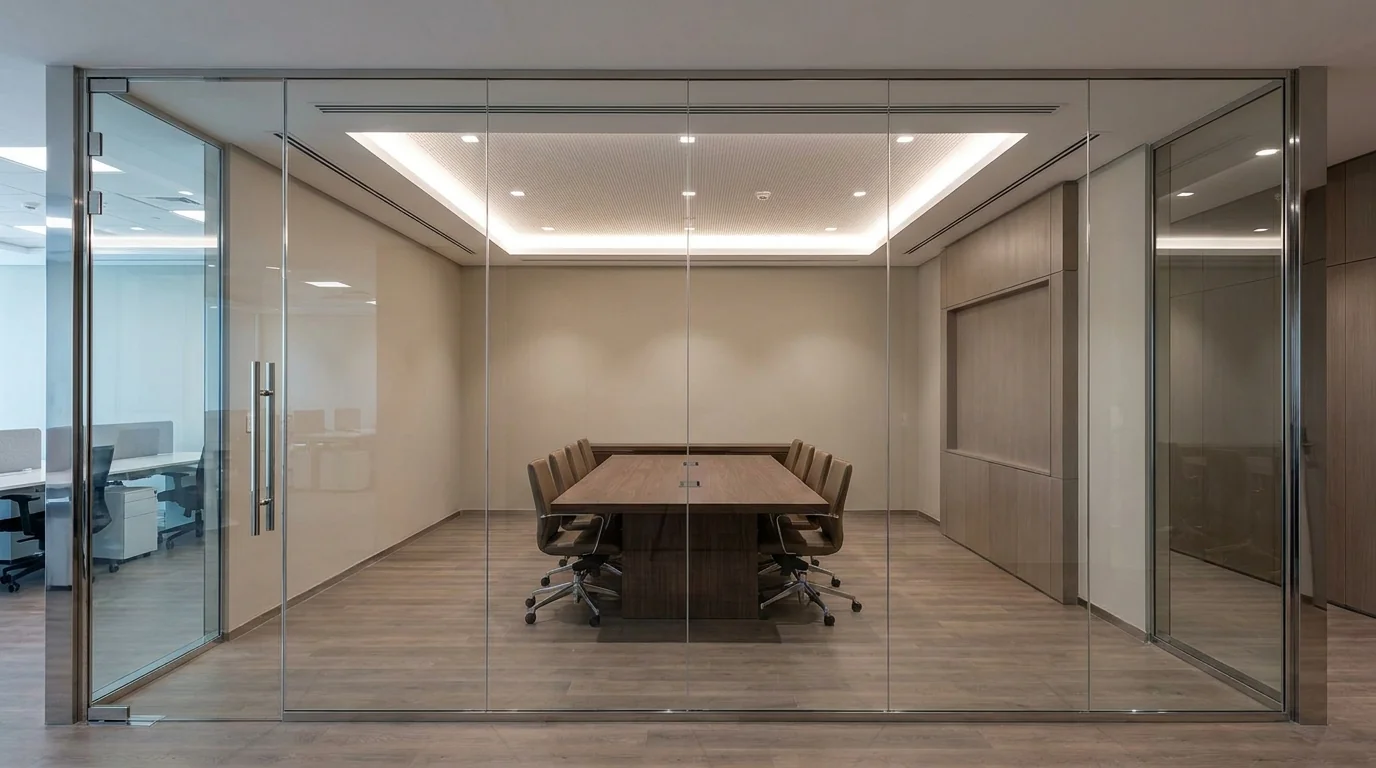
Fire ratings explained: FD30, FD60, FD90, FD120
The number is minutes. It is how long the doorset held in the test — not a guarantee for any particular real fire, but a measured, comparable benchmark that the fire strategy for the building is built around.
| Rating | Integrity held for | Typically specified for |
|---|---|---|
| FD30 / E30 | 30 minutes | Apartment entrance doors, room doors off a protected corridor, lower-risk internal compartments |
| FD60 / E60 | 60 minutes | Stairwell and lobby doors, corridor cross-doors, plant and electrical rooms, many commercial applications |
| FD90 / E90 | 90 minutes | Higher-risk separations, some service and storage rooms, certain car park and basement routes |
| FD120 / E120 | 120 minutes | Major compartment separation, high-risk plant, transformer and fuel store rooms |
Integrity and insulation are not the same thing
European classification separates two properties, and the difference matters when a door is near an escape route:
- E (integrity) — the doorset stops flames and hot gases passing through. An E60 door held flame for 60 minutes.
- I (insulation) — it also limits how hot the unexposed face gets, so someone can pass close to it. EI60 means both, for 60 minutes.
- S is added where smoke leakage is controlled, for example EI60-S.
A door marked E60 is not automatically EI60. If the specification calls for insulation and only integrity is supplied, the doorset does not comply — and glazed doors are where this is most often missed, because fire-rated glass that gives integrity alone is much cheaper than the insulating type.
Standards, testing and certification in the UAE
Fire safety in the Emirates works to the UAE Fire and Life Safety Code of Practice, published by Civil Defence. The code sets where rated separation is needed; the doorset itself is proven by test evidence to a recognised standard.
BS 476 Part 22
The British test method, which produces the familiar FD30, FD60, FD90 and FD120 classifications for integrity, insulation and stability.
BS EN 1634-1
The European method for door, shutter and openable window assemblies, classified as E, EI and related notations. Testing is bi-directional and the report defines a field of application.
UL 10C / NFPA 252
North American positive-pressure test routes, common where the project or the client specification follows US practice.
Certificate of Conformity
Fire and life safety products placed on the UAE market can require a Civil Defence Certificate of Conformity, issued through an approved certification body.
Ask for the evidence, not the label. A sticker is not certification. What matters is a test report or assessment covering the doorset as it is actually being supplied — that leaf, that frame, that glass, that hardware, in that size range. We supply the documents with the doorset so your consultant and the authority can check them.
Approval for the building itself runs through the project's fire strategy, the consultant and the contractor, and is granted to the building rather than to any one supplier. Our part is to supply doorsets whose evidence stands up to that review and to install them so the evidence still applies.
Where fire-rated doors are required
The fire strategy drawings decide this, not a rule of thumb. That said, these are the openings that almost always carry a rating on a Dubai high-rise, villa compound or fit-out project.
Escape stairs and lobbies
Doors protecting the staircase, which is the route people leave by and firefighters come up. Usually the highest-specified doors in a residential building.
Protected corridors
Cross-corridor doors that divide a long escape route into compartments so smoke cannot run the length of it.
Apartment and hotel room entrances
The door between a private unit and the common corridor, where smoke control matters as much as flame.
Plant and electrical rooms
Switch rooms, generator rooms, pump rooms, transformer rooms — high-risk spaces separated from everything else.
Commercial kitchens
Separation between a kitchen and the spaces around it, where ignition risk is concentrated.
Car parks and basements
Doors between parking levels, cores and lift lobbies, where fire load and smoke movement are both high.
Service risers and stores
Riser cupboards and storage rooms that would otherwise let fire travel vertically through the building.
Tenancy separation
Between units in retail and offices, where each tenancy is its own compartment.
Types of fire-rated doorset we supply
| Type | Where it suits | Notes |
|---|---|---|
| Steel single and double doors | Plant rooms, risers, back-of-house, car parks | The workhorse. Durable, takes abuse, available in higher ratings |
| Timber-faced doorsets | Apartment entrances, hotel rooms, offices | Mineral core with a veneer or laminate face, so it reads as a normal internal door |
| Glazed fire-rated doors | Offices, lobbies, showrooms, meeting rooms | Fire-rated glass in a tested frame, where daylight and sightlines matter |
| Doors with vision panels | Corridors and stairwells | A small rated pane so people can see through before pushing the door open |
| Double doors with rebated meeting stiles | Wide corridors, equipment routes | Need a correctly sequenced closing system so both leaves latch in order |
| Acoustic and fire combination sets | Hotels, offices, plant rooms | Where noise control and fire separation are needed in the same opening |
| Fire-rated glazed screens | Lobbies, atria, office fronts | Screens and partitions carrying the same rating as the doors in them |
Where the opening does not need a rating, we also supply standard office doors, glass partition systems and commercial entrance doors.
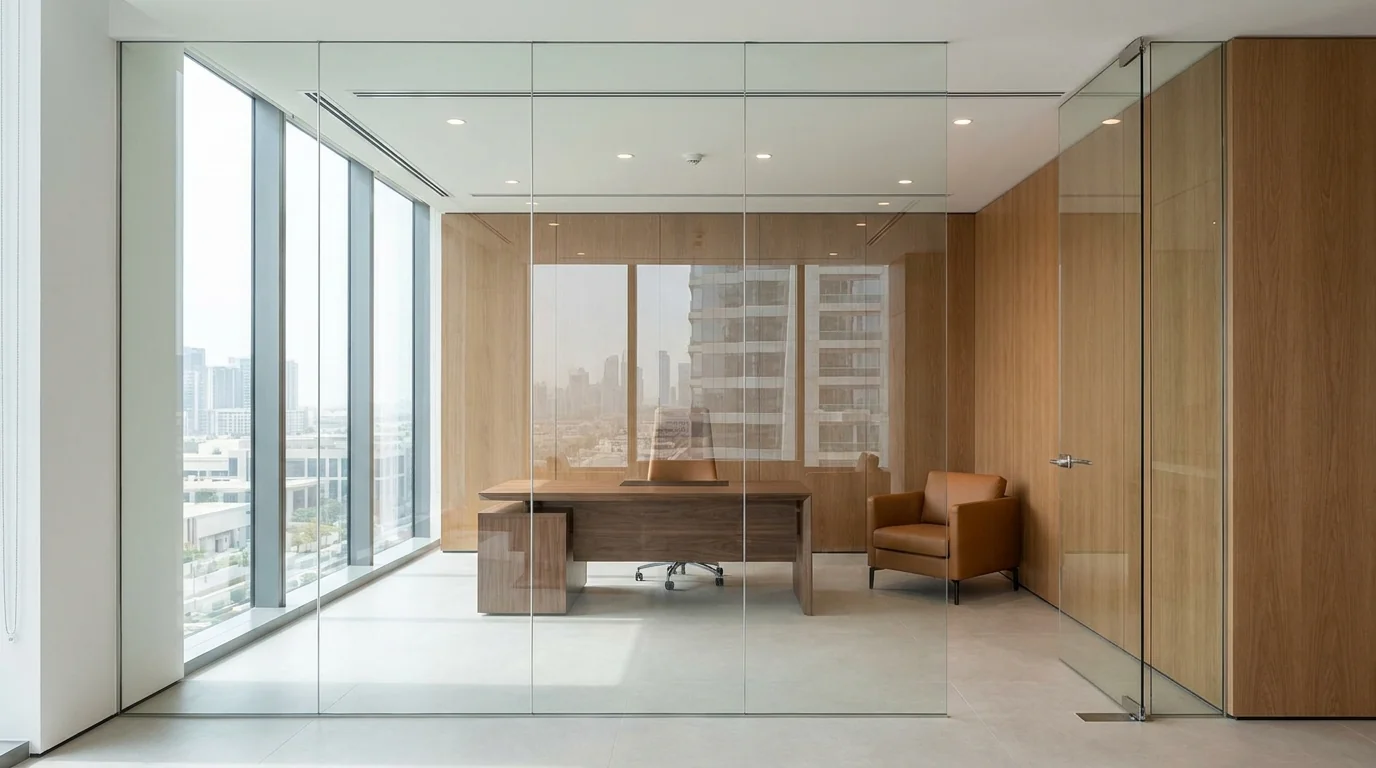
Fire-rated glazing
Glass in a fire door is the part most often specified wrong, because ordinary toughened or laminated safety glass looks identical to fire-rated glass and costs a fraction of the price.
- Integrity-only glass holds flame and smoke back but transmits heat. It is used where nobody will be standing close to the unexposed face for long.
- Insulating fire glass contains interlayers that expand and turn opaque in heat, keeping the unexposed face cool enough to pass by. It is thicker, heavier and more expensive.
- The frame and bead detail are part of the tested assembly. Fire-rated glass in an untested bead is not a rated screen.
- Maximum pane sizes come from the test evidence, so a design that wants one large sheet may have to become two panes with a rated transom.
If the drawings say the screen is rated, ask which classification: integrity alone, or integrity plus insulation. The cost difference is significant and so is the consequence of getting it wrong.
Hardware: the part that gets changed later
A fire doorset passes its test with specific ironmongery. Swapping a closer, adding a lock or drilling the leaf for a new handle can invalidate the evidence, and it happens on almost every building after handover.
Self-closing devices
Overhead closers, concealed closers or floor springs, sized so the door closes fully and latches from any open position, against draughts and pressure.
Hinges
Rated hinges, in the number the test evidence specifies. Three is common on a heavy leaf; fewer may not hold as the leaf distorts in heat.
Locks and latches
A fire door has to latch, not just close. Latch bolts, mortice locks and their keeps all form part of the tested set.
Panic and emergency exit hardware
Push bars and push pads on escape routes, so the door opens under pressure from a crowd but still latches shut behind them.
Hold-open devices
Where a door must stand open day to day, an electromagnetic hold-open linked to the fire alarm releases it on alarm. That is the compliant alternative to a wedge.
Signage and identification
"Fire door keep shut" or "keep locked" signage, and a legible identification plug or label so the doorset can be traced later.
Installation: where ratings are usually lost
A certified doorset installed badly is not a certified doorset. Most of the on-site failures we see on Dubai projects come down to the gap, the fixings and the fire-stopping.
Check the opening
Structural opening measured and squared, and confirmed as a construction the test evidence covers. A rated set tested in masonry is not automatically valid in a lightweight partition.
Fix the frame correctly
Fixing type, spacing and distance from corners as the evidence specifies, into sound structure rather than into render or board alone.
Fire-stop the perimeter
The gap behind the frame packed and sealed with rated material. Ordinary expanding foam or silicone is not fire-stopping.
Set the gaps
Leaf-to-frame gaps kept within the tested tolerance all round, and the threshold gap kept within limits so intumescent and smoke seals can do their job.
Fit the tested hardware
The specified hinges, closer, lock and seals, with no extra drilling or cut-outs beyond what the evidence allows.
Test and hand over
Every door closed and latched from several positions, double doors checked for sequence, and the documents handed over with the door.
General installation work on non-rated openings is covered on the door installation page.
What affects the cost of a fire-rated door
Fire doorsets are priced on the assembly and its evidence, not on the leaf alone, which is why two doors that look identical can be far apart on price.
- Rating. 30 minutes costs less than 120. The core, the frame and the seals all change.
- Integrity only, or integrity plus insulation. The single biggest jump on glazed sets.
- Material and finish. Painted steel, powder-coated steel, laminate, veneer or a glazed frame.
- Glazing. Whether there is a vision panel, how big, and which class of fire glass.
- Size and leaf count. Oversized leaves and double doors need heavier hardware and stricter detailing.
- Hardware schedule. Panic hardware, access control, electromagnetic hold-opens and concealed closers all add.
- Quantity. A schedule of similar doorsets prices very differently from one-off replacements.
- Site conditions. Existing openings that need making good, or partitions that need upgrading, add work before the door goes in.
We quote after seeing the door schedule or the opening, so the price covers the doorset that will actually comply rather than the cheapest leaf that fits the hole. We price and install across Dubai and the wider UAE, including Abu Dhabi, Sharjah, Ajman and Ras Al Khaimah.
Inspection and maintenance
Fire doors are safety equipment, and they are used harder than any other door in a building. In Dubai towers and hotels they take constant traffic, so they need looking at regularly — and the checks themselves are quick.
Does it close and latch?
Released from part-open and fully open, the door should shut fully and the latch should engage every time, with no push needed.
Are the gaps still right?
Even, consistent gaps around the leaf. A gap that has opened up as the building moved lets smoke through long before flames arrive.
Are the seals intact?
Intumescent strips unpainted, unbroken and fully in their grooves; smoke seals not flattened, torn or missing.
Is the glazing sound?
Fire-rated pane intact, beads secure, no replacement with ordinary glass after a breakage.
Is hardware original?
Hinges tight and complete, closer working, nothing added or removed since installation, no holes drilled through the leaf.
Is it being held open?
No wedges, no bins, no propped-open doors. If it needs to stand open, fit an alarm-linked hold-open instead.
We service and repair fire doorsets alongside our other door services, and can repair or replace seals, closers and hardware with parts that match the evidence.
Where fire-rated doors sit in a wider fit-out
A fire-rated doorset is almost never ordered on its own. It sits inside a fit-out with escape routes, partitions and ordinary doors around it, and the specification has to hold together across all of them.
- The building rules around the opening. Beyond the fire code itself, structural and glazing requirements for the opening are set out in the Dubai Building Code published by Dubai Municipality, and building management will usually have a fit-out manual as well.
- Commercial entrances and storefronts around the rated openings — see commercial doors in Dubai.
- Office interiors where rated sets meet glazed partitions — see office doors and framed and frameless partitions.
- Villas with a rated garage or service door into the house — see villa entrance doors in Dubai.
- Non-rated openings elsewhere in the same project — see folding doors, sliding doors and bedroom doors.
- Survey, fitting and aftercare — see door installation in Dubai, our full range of services and completed projects.
Fire-rated doors in Dubai: FAQs
What is a fire-rated door?
A tested doorset: leaf, frame, intumescent and smoke seals, self-closing device, certified hardware and any glazing, proven together in a furnace test to resist fire for a set number of minutes. The rating belongs to the whole assembly, not to the leaf on its own.
What do FD30, FD60, FD90 and FD120 mean?
The number is the minutes of fire resistance the doorset achieved in test. FD30 is 30 minutes, FD60 is 60, FD90 is 90 and FD120 is 120. Under the European system the equivalents are written E30, E60 and so on, with EI used where insulation is also achieved.
What is the difference between E and EI?
E is integrity: the door stops flames and hot gases passing. EI adds insulation: it also limits how hot the unexposed face becomes, so people can pass close to it. A door marked E60 is not automatically EI60, and the difference matters most on glazed doors.
Which standards apply in the UAE?
Fire separation requirements come from the UAE Fire and Life Safety Code of Practice published by Civil Defence. Doorsets themselves are proven by test evidence to a recognised standard such as BS 476 Part 22, BS EN 1634-1, or UL 10C and NFPA 252 where US practice is followed.
Do fire doors need Civil Defence approval in the UAE?
Approval is granted to the building through its fire strategy, the consultant and the contractor, rather than to a supplier. Fire and life safety products placed on the UAE market can also require a Civil Defence Certificate of Conformity issued through an approved certification body. We supply the test evidence and certification with each doorset so the consultant and the authority can check it.
Where are fire-rated doors required?
The fire strategy drawings decide it. In practice, escape stairs and lobbies, protected corridors, apartment and hotel room entrances, plant and electrical rooms, commercial kitchens, car park and basement routes, service risers and tenancy separations almost always carry a rating.
Can a fire door have glass in it?
Yes, using fire-rated glass in a tested frame and bead detail. Ordinary toughened or laminated safety glass is not fire-rated, even though it looks the same. Maximum pane sizes come from the test evidence.
Does a fire door have to close by itself?
Yes. A fire door only works when it is shut and latched, so it must have a self-closing device that closes and latches it from any open position. If a door needs to stand open during the day, the compliant solution is an electromagnetic hold-open linked to the fire alarm, not a wedge.
Can I change the handle, lock or closer on a fire door?
Not freely. Hardware forms part of the tested assembly, so substituting a closer, adding a lock or drilling new holes in the leaf can invalidate the evidence. Replacements should match what the test evidence allows.
Can you install fire doors into an existing opening?
Usually yes, but the opening and the surrounding construction have to be checked first. A doorset tested in masonry is not automatically valid in a lightweight partition, and the perimeter has to be fire-stopped with rated material rather than ordinary foam or silicone.
How much do fire-rated doors cost in Dubai?
It depends on the rating, whether insulation is required as well as integrity, the material and finish, the glazing class, the size and leaf count, the hardware schedule and the quantity. We quote from the door schedule or after seeing the openings.
How often should fire doors be checked?
Regularly, and after any building work near them. The quick checks are: does it close and latch on its own, are the gaps still even, are the intumescent and smoke seals intact, is the glazing still the rated pane, is the hardware original and complete, and is anything holding it open.
Do you supply steel, timber and glazed fire doors?
Yes. Steel single and double doors for plant rooms, risers and car parks, timber-faced doorsets for apartments, hotels and offices, and glazed fire-rated doors and screens where daylight and sightlines matter.
Do you work outside Dubai?
Yes. We supply and install across the UAE, including Abu Dhabi, Sharjah, Ajman, Umm Al Quwain and Ras Al Khaimah.
Send us the door schedule
If you have drawings or a schedule, send them over and we will price the doorsets against the ratings specified. If you have an existing door you are unsure about, a photo of the leaf edge, the seals and the closer usually tells us a lot.