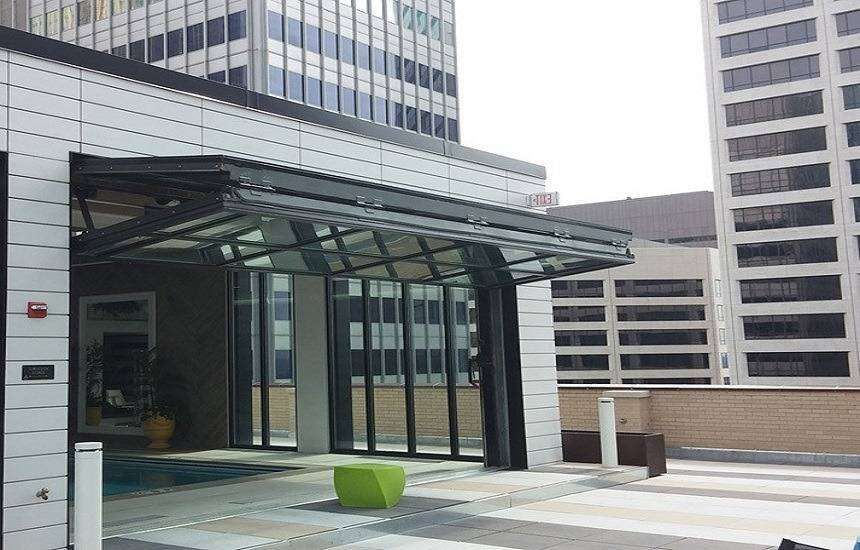
Accordion doors and bifold doors both fold, both save space and are often confused, and some suppliers use the two names for the same thing. They are different products. Choosing the wrong one means paying for engineering you don't need, or fitting a door that can't cope with the opening.
This guide explains what each door is, how they compare on cost, strength, sealing and looks, and where each one belongs in a UAE home. We supply and install both, so the aim here is to help you pick the right one rather than the most expensive one.
The short answer: choose an accordion door for wardrobes, laundries, pantries and light room dividers where budget matters most. Choose a bifold door for garden, pool and terrace openings, or anywhere you want a strong, glazed, lockable door that opens most of a wall.
What is an accordion door?
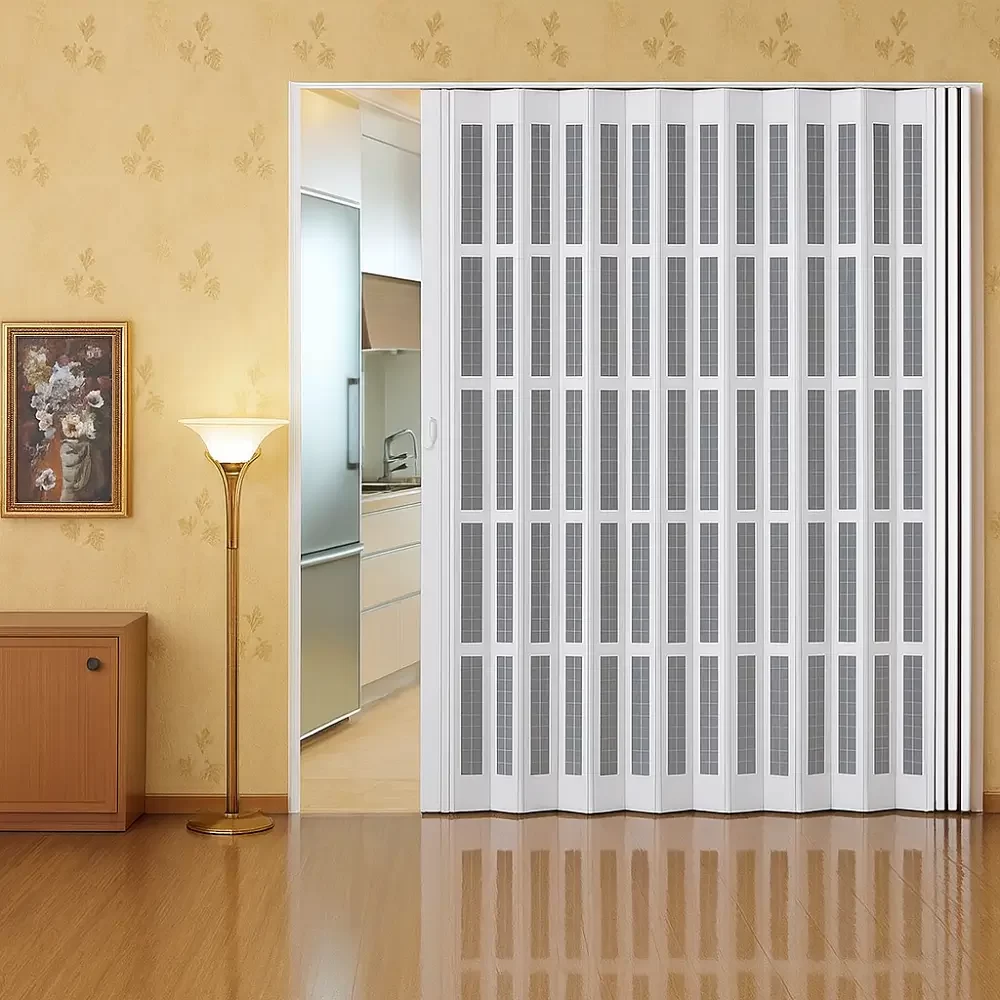
An accordion door, also called a concertina door, is made of many narrow panels joined edge to edge. When you open it, the panels fold in a tight zigzag, like the bellows of an accordion, and bunch up at one or both sides of the opening. Most accordion doors hang from a top track, with little or no guide at the floor.
Because the panels are narrow and light, accordion doors are usually made from PVC or vinyl, laminated board, thin timber or light aluminium, sometimes with frosted or clear inserts. The mechanism is simple, which keeps the cost low and makes installation quick.
That lightness is both the strength and the limit of an accordion door. It is easy to push, needs little space when folded and suits small, sheltered openings. It does not seal tightly, it is not built for weather, and it offers little security.
What is a bifold door?
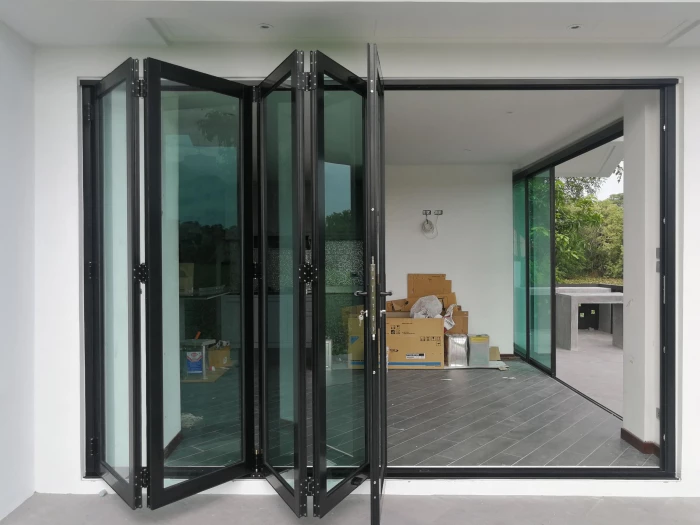
A bifold door uses fewer, wider panels, usually 60 cm to 1 m each, hinged together and carried on rollers in a track. When opened, the panels fold in pairs and stack neatly to the side, clearing up to about 90% of the opening. One panel can be a traffic door that opens on its own like a normal door.
External bifold doors are built on rigid aluminium frames with toughened glass, often double glazed, with multi-point locks, weather seals and a drained threshold. They are designed to link a living room to a garden, pool or terrace and to cope with daily use for many years.
Internal bifold doors are lighter versions for dividing rooms. See our internal folding doors guide for those, and our aluminium bifold doors page for external systems.
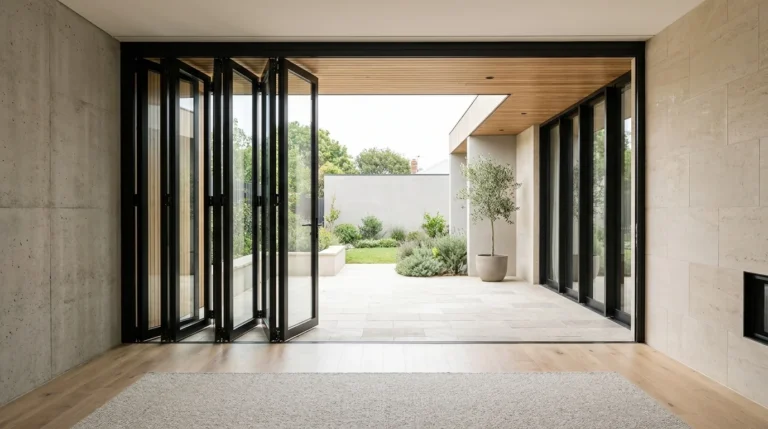
Accordion vs bifold doors: the key differences
| Accordion door | Bifold door | |
|---|---|---|
| Panels | Many narrow panels | Fewer, wider panels |
| Materials | PVC, vinyl, laminate, light timber or aluminium | Aluminium frames with toughened glass |
| How it folds | Tight zigzag | Panels fold in pairs and stack to the side |
| Opening size | Small to medium, mostly indoors | Small to very large, indoors and outdoors |
| Weather sealing | None to minimal | Gaskets, brush seals and drained threshold |
| Heat and sound | Little insulation | Thermal break and double glazing available |
| Security | Simple latch or lock | Multi-point locks |
| Daylight | Mostly solid, some inserts | Mostly glass |
| Cost | Much lower | Higher; priced per panel |
| Best for | Wardrobes, laundries, pantries, light dividers | Gardens, pools, terraces, open-plan living |
In short: an accordion door is a practical, low-cost way to close a small internal opening. A bifold door is a building product that replaces part of a wall, and it has to keep out heat, dust, rain and intruders.
Accordion door materials compared
If an accordion door is the right choice, the material decides how long it lasts and where it can go.
| Material | Look | Moisture | Best for |
|---|---|---|---|
| PVC | Plain or wood-grain finish | Resists moisture; wipes clean | Laundries, bathrooms, maid's rooms, stores |
| Vinyl-covered | Soft, fabric-like finish | Fine in dry rooms | Closets and light dividers |
| Laminate or timber | Warm, furniture-like | Keep away from water | Bedrooms, majlis and studies |
| Light aluminium | Slim frames, often with glass inserts | Good | Offices and modern interiors |
In Dubai apartments and villas, PVC is the most common choice for utility spaces because humidity and cleaning water don't harm it. For living areas, where the door is always on show, most homeowners go for a glazed internal bifold instead.
Accordion vs bifold doors: which costs less?
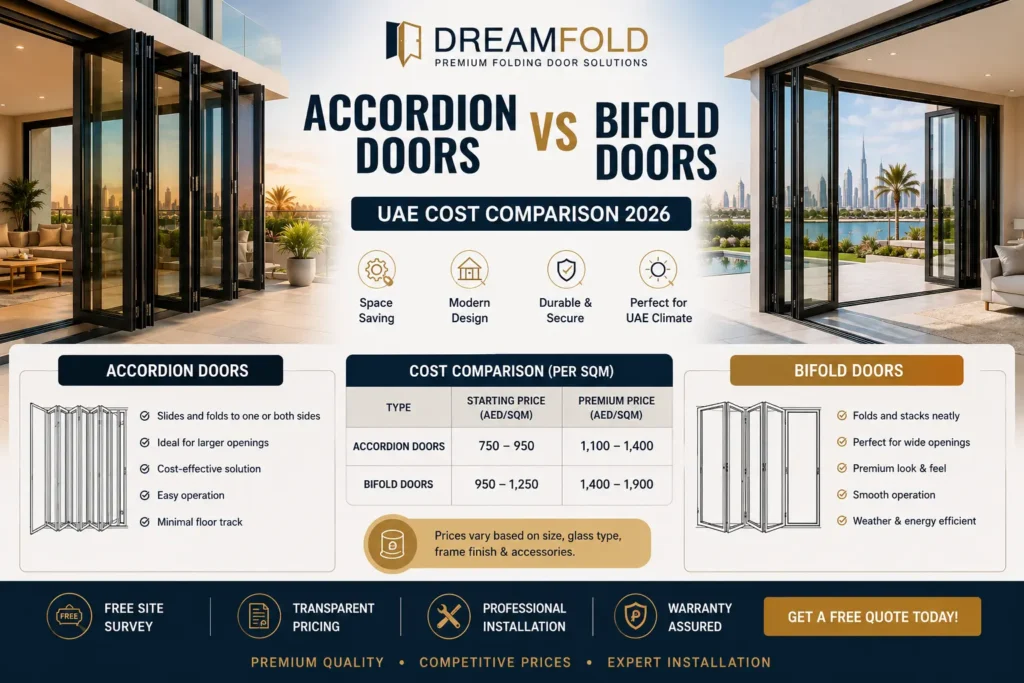
Accordion doors cost far less than bifold doors, because they use lighter materials, simpler hardware and no glass or weather sealing. The gap is real, and it reflects real differences in engineering rather than branding.
Our aluminium bifold doors start from AED 2,500 per panel, supplied and installed, and standard-height doors typically cost AED 2,500–3,500 per panel. A 3-panel door is about AED 7,500–10,500. See the full breakdown on our aluminium bifold door prices section. Accordion and PVC folding doors are quoted after measuring the opening, because the size, material and finish change the price.
What moves the price of each
Accordion doors
- Material: PVC is the most affordable; timber and aluminium cost more.
- Width and height of the opening.
- Glass or frosted inserts.
- Single or double-sided stacking.
Bifold doors
- Number of panels, which is the biggest factor.
- Glass: single, double glazed, Low-E, laminated or smart glass.
- Height and weight, which decide standard or heavy-duty hardware.
- Threshold type, colour and motorisation.
Spending bifold money on a laundry cupboard wastes budget. Putting an accordion door on a garden opening wastes the opening. Match the door to the job, and both are good value.
Where each door works best in UAE homes
Choose an accordion door for
- Wardrobes and closets: the door folds out of the way without the swing of hinged doors.
- Laundry rooms and utility areas: PVC resists moisture and wipes clean.
- Pantries and kitchen stores: a quick, low-cost door for a narrow opening.
- Maid's rooms and secondary bathrooms: PVC folding doors suit damp areas.
- Temporary or light dividers: screening off a space you rarely close.
Choose a bifold door for
- Living room to garden or pool: opens most of the wall and seals against heat and sand.
- Terraces and balconies: weather-tight, lockable and fully glazed.
- Open-plan living and majlis: glazed internal bifolds keep the daylight.
- Kitchens: a bifold door or window opening to a barbecue area.
- Cafés and shops: heavy-duty systems for daily use. See commercial folding doors.
For budget folding doors in wardrobes, laundries and bathrooms, see our PVC folding doors. For bathroom doors in general, including waterproof WPC and aluminium options, see our bathroom doors.
Accordion or bifold for a large patio opening?
For a large patio or garden opening, a bifold door is the right choice. An accordion door is not built for it, for four reasons:
- Weather: accordion doors have no real seals or drained threshold, so heat, sand and rain get in.
- Strength: lightweight panels flex in the wind and wear quickly on a wide span used every day.
- Security: a simple latch is not enough for a ground-floor opening onto a garden.
- Energy: without glazing and insulation, the door lets heat into an air-conditioned room.
An aluminium bifold with a thermal break, double glazing and multi-point locks is built for exactly this job. If you want the widest view when the door is closed, look at frameless folding doors. Some people call wide glass folding doors "accordion glass doors". Technically these are bifold systems, and they need the same engineering.
Accordion vs sliding and pocket doors
Accordion doors are often compared with other space-saving doors, not only with bifolds.
| Door | Space needed | Opening | Good for |
|---|---|---|---|
| Accordion | A small bundle at the side | Most of the opening | Low-cost closets and utility rooms |
| Bifold | A stack about one panel wide | Up to about 90% | Wide openings, indoors and out |
| Sliding | Wall space beside the opening | About half to two-thirds | Balconies and rooms with no space for a stack |
| A cavity inside the wall | The full door width | New builds or renovations that can open the wall |
For dividing rooms, an accordion door is the cheapest option but blocks the least sound and light. A sliding door looks cleaner and seals better. A glazed internal bifold keeps daylight and opens the widest. For a fixed glass wall with a door, see our glass partitions. For the bigger comparison between bifold and sliding systems, read our bifold vs sliding doors guide.
Heat, dust and upkeep in the UAE
Dubai's heat, fine dust and coastal humidity are hard on any door that moves. Here is how the two types cope.
Accordion doors
Used indoors, accordion doors face little weather. The usual problem is dust in the top track and fold hinges, which makes the door stiff. Wipe the track every few weeks, keep hinges clean and avoid heavy grease. PVC panels can be wiped with mild soap. Keep timber accordion doors away from damp areas.
Bifold doors
External bifolds face the full climate. A thermal break in the frame and double glazing reduce the heat reaching the room, and seals and brush strips keep out most sand. Vacuum the bottom track every week or two, more often after a sandstorm. Wipe the rollers and hinges, and have the doors adjusted if a panel starts to drag. Our bifold door maintenance guide covers this in detail.
How to choose between accordion and bifold doors
Answer these five questions and the choice usually becomes clear:
- Does the door face outside? If yes, choose a bifold.
- How wide is the opening? Small closet and utility openings suit accordion doors. Wide openings need a bifold.
- Do you need light through it? Glazed bifolds keep a room bright. Most accordion doors are solid.
- Does it need to lock or block sound? Bifolds seal and lock far better.
- What is the budget for this opening? For secondary spaces, an accordion or PVC door is the sensible choice.
Still unsure? We visit, measure the opening and recommend the right door for the space, with a written quote. See our door installation service.
Accordion vs bifold doors: FAQs
What is an accordion door?
An accordion door, also called a concertina door, is made of many narrow panels that fold in a tight zigzag and bunch at the side of the opening. It usually hangs from a top track and is made from PVC, vinyl, laminate, light timber or aluminium.
What is the difference between accordion and bifold doors?
Accordion doors have many narrow, light panels and are used mostly indoors for closets, laundries and light dividers. Bifold doors have fewer, wider panels on aluminium frames with glass, seals and multi-point locks, and are built for large openings, including garden and terrace doors.
Are accordion doors and bifold doors the same thing?
No. Both fold, and some suppliers use the names loosely, but accordion doors are lightweight concertina doors, while bifold doors are engineered systems with wider glazed panels, rollers, seals and locks.
Which is cheaper, accordion or bifold doors?
Accordion doors cost much less, because they use lighter materials and simpler hardware. Our aluminium bifold doors start from AED 2,500 per panel supplied and installed, while accordion and PVC folding doors are quoted after measuring the opening.
Can I use an accordion door for a patio or garden opening?
It is not recommended. Accordion doors have little weather sealing, security or insulation, so heat, sand and rain get in. A bifold door with a thermal break, double glazing and multi-point locks is built for patio and garden openings.
Are accordion doors good for bathrooms?
PVC accordion doors suit bathrooms and laundries because they resist moisture and wipe clean. Avoid timber accordion doors in wet areas. For fully waterproof options, WPC and aluminium bathroom doors are also available.
Accordion door or sliding door for dividing a room?
An accordion door is the cheapest and folds into a small space, but it blocks little sound and light. A sliding door looks cleaner and seals better, and a glazed internal bifold keeps daylight while opening the widest.
Accordion doors vs pocket doors: which is better?
A pocket door disappears into a cavity in the wall, so it needs the wall to be opened or built for it. An accordion door fits into an existing opening with no building work and costs less, but it stays visible when folded.
What are accordion glass doors?
The name is sometimes used for wide multi-panel glass folding doors. Technically these are bifold systems, with aluminium frames, toughened glass, rollers and seals, and they need the same engineering as any bifold door.
Do accordion doors lock?
Most accordion doors have a simple latch or lock, suitable for closets and internal rooms. For external doors or anywhere security matters, a bifold door with multi-point locks is the right choice.
How long does it take to install bifold doors?
After the site visit and order, our aluminium bifold doors usually take about 2–3 weeks to make and 1–2 days to install.
Which lasts longer in the UAE, accordion or bifold doors?
A well-made aluminium bifold door is built for many years of daily use in the UAE climate, with rollers and seals that can be adjusted or replaced. Accordion doors are lighter and suit lighter use; kept indoors and clean, they give good service in closets and utility rooms.
Not sure which folding door you need?
Send a photo of the opening with its width and height on WhatsApp. We will tell you whether an accordion or bifold door suits it, then visit, measure and quote in writing.
Al Qusais Industrial First, Dubai · Mon–Sat 8:00–19:00 · contact@dreamfold.ae